

Meta Ads and Google Ads both scale revenue, but they do it through different user mindsets. One platform tends to create demand through discovery, while the other captures demand through intent.
The right choice depends on how people find you, how long they take to decide and what you can measure confidently. Your offer, margins and creative capacity matter as much as the ad platform.
How Each Platform Reaches Customers?

Google Ads is built around searches, plus placements across YouTube, Gmail and the Display Network. Search campaigns reach people who are actively looking for a solution, which often means faster conversion paths.
Meta Ads runs across Facebook, Instagram, Messenger and Audience Network. It reaches people based on interests, behaviors and engagement signals, which is strong for building awareness and nudging consideration.
User Intent And Buying Readiness
Intent is the biggest difference. Search ads map directly to a need, because the user provides the keyword that reveals what they want right now.
Meta is usually interruption-based, so the user is not requesting your product in the moment. That can be a drawback for urgent purchases, but it is powerful for products that benefit from storytelling and repeated exposure.
Targeting Options And Audience Signals

Google targeting often starts with keywords, which can be layered with location, device, demographics and audiences. This gives you a clear structure for controlling relevance and filtering traffic quality.
Meta targeting leans on audience modeling, engagement data and lookalike style expansion where available. Interest targeting can be effective, but performance typically improves when you feed the platform strong conversion data and high-quality creative.
Creative Formats And Ad Inventory
Google Search ads rely on headlines, descriptions and extensions, which rewards clarity and relevance. YouTube and Display open up video and banner formats, but they usually need strong creative strategy to avoid low-intent clicks.
Meta is creative-driven by design, with feeds, Stories, Reels and carousels that reward high-performing concepts. Frequent creative iteration is often required, because ad fatigue can arrive quickly in smaller audiences.
Cost Structure And Budget Efficiency

Google Search can be expensive in competitive categories because you are bidding against direct competitors for the same keywords. The upside is that high-intent clicks can justify higher costs when conversion rates and average order value are healthy.
Meta can deliver lower cost per thousand impressions and scale reach efficiently. However, lower costs do not automatically mean better profitability, so you still need disciplined measurement and offer-market fit.
Funnel Fit For Awareness To Conversion
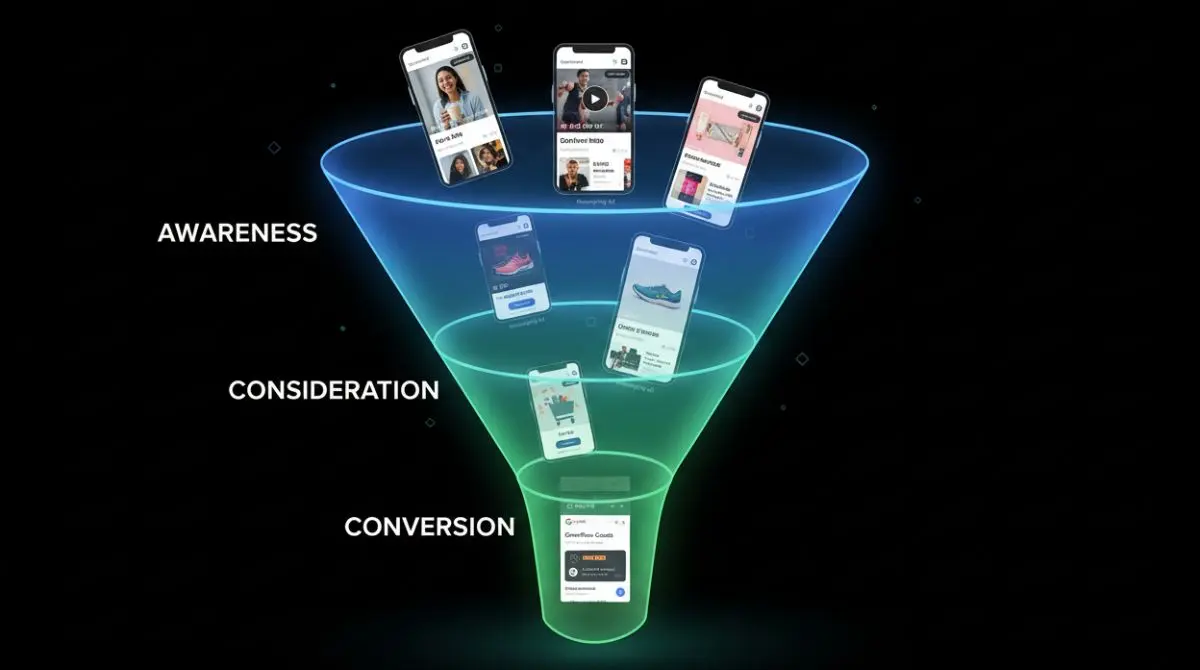
Google often performs well at the bottom of the funnel, especially for lead generation and direct response ecommerce. Meta often excels at top and mid-funnel, where you shape preferences, educate and retarget engaged users.
Many growth plans use both, assigning each platform a role in the customer journey. The key is to avoid duplicating the same job on both platforms without a clear incremental lift.
Measurement And Attribution Challenges
Both platforms can over-credit themselves if you rely only on in-platform reporting. Privacy changes, consent gaps and cross-device behavior can cause undercounting or delayed conversion signals.
Reliable measurement usually comes from clean conversion tracking, consistent naming and a reporting layer that compares platform data with your backend outcomes. That can include CRM stages, qualified leads, or post-purchase margins.
Platform Strengths Side By Side
This comparison highlights where each platform typically shines and what trade-offs to expect. Use it to align campaign objectives with the platform that best matches user behavior.
| Evaluation Area | Meta Ads | Google Ads |
|---|---|---|
| Primary Strength | Discovery and demand creation through feeds and video | Demand capture through search intent and high relevance |
| Best-Fit Objectives | Awareness, consideration, remarketing, ecommerce scaling | Lead generation, direct response, local services, high-intent sales |
| Creative Requirements | High, frequent testing of hooks, visuals and formats | Moderate for Search, higher for YouTube and Display |
| Common Cost Pattern | Lower CPM, performance depends on conversion signal quality | Higher CPC in competitive auctions, efficient when intent is strong |
When Meta Ads Tends To Win?
Meta is often the better engine when you need to generate demand, expand reach and build a pipeline of engaged prospects. It can also scale ecommerce catalogs effectively when product-market fit is clear and creative is strong.
Meta can also help when your keyword landscape is limited or too expensive, since it does not depend on search volume. Strong landing pages and fast testing cycles become more important in this environment.
- Visual or experiential offers. Products and services that benefit from video, before-and-after, or demonstrations often earn attention faster.
- Broad audiences with many use cases. When multiple segments can buy, creative can speak to different pain points and let the algorithm learn.
- Efficient remarketing loops. Engaged viewers and site visitors can be re-activated with tailored messages and social proof.
These strengths depend on consistent creative production and clear conversion events that the platform can optimize toward.
When Google Ads Tends To Win?
Google Ads is often the first choice when people search for what you sell and the purchase intent is clear. This is common in local services, B2B lead generation and urgent problem solving where speed matters.
Search campaigns also give you direct control over query intent, which can improve lead quality when your negatives and match types are well managed. Strong ad relevance and landing page alignment are essential for efficiency.
- Clear high-intent keywords. If buyers use specific terms, you can meet them at the decision point.
- Structured lead qualification. Forms, call tracking and CRM stages can connect spend to qualified pipeline.
- Local intent and maps behavior. Location-based searches often convert quickly when offers and hours are accurate.
These advantages show up most when you maintain query hygiene and optimize for business outcomes, not just clicks.
How To Choose The Right Platform For Growth?

A good decision starts with your business model and what signals you can measure. If you have clear intent keywords and fast sales cycles, Google often provides more immediate clarity.
If your product needs explanation, differentiation, or repeated touchpoints, Meta can create the demand that search alone cannot capture. Many teams run both to balance short-term revenue with pipeline creation.
- Define the conversion that matters. Choose a primary outcome such as qualified lead, booked call, or profitable purchase.
- Map intent and awareness. Identify whether customers search actively or need discovery and education first.
- Check your creative capacity. Confirm whether you can produce and refresh ads at the speed your platform demands.
- Validate tracking and data flow. Ensure conversions, values and key events are captured consistently from click to backend.
- Start with one growth constraint. Pick the platform that addresses your biggest bottleneck, then expand once results stabilize.
This sequence keeps platform choice tied to strategy, not preference or hype.
Common Mistakes That Reduce Performance
Many accounts struggle because the platform is blamed for problems caused by setup, offer clarity, or inconsistent data. Fixing fundamentals often unlocks performance without changing channels.
- Optimizing for the wrong event. Shallow events like page views can train algorithms to find cheap traffic instead of buyers.
- Weak landing page alignment. When messaging does not match the ad promise, conversion rates drop and costs rise.
- Inconsistent testing. Small changes without a plan make it hard to learn what drives lift.
- Over-reliance on last-click views. Under-crediting upper funnel efforts can cause underinvestment in what creates demand.
Correcting these issues creates a stable base for scaling budgets and improving return on ad spend.
Conclusion
Meta Ads is typically better for demand creation, creative-led growth and building audiences that convert over time. Google Ads is typically better for capturing existing intent, driving high-quality leads and converting buyers who are ready now.
The best platform for business growth is the one that matches your customer journey and can be measured against real outcomes. When the fundamentals are strong, using both with clear roles often produces the most resilient growth.