
SEM stands for search engine marketing, a discipline focused on getting visibility in search results through paid advertising. It is most often associated with pay per click ads that appear on search engines and partner networks.
SEM matters when you need demand capture, fast traffic and measurable outcomes. It complements long term organic search by letting you buy attention at the moment someone is actively searching.
What SEM Means In Plain Terms?
SEM is the practice of creating, running and optimizing paid search campaigns so your ads can appear for specific queries. You choose what searches you want to show up for, how much you are willing to pay and what message the searcher sees.
The core promise of SEM is intent. Ads are triggered by keywords and audience signals, so the click often carries stronger purchase or action intent than many other channels.
SEM Vs SEO Differences That Matter
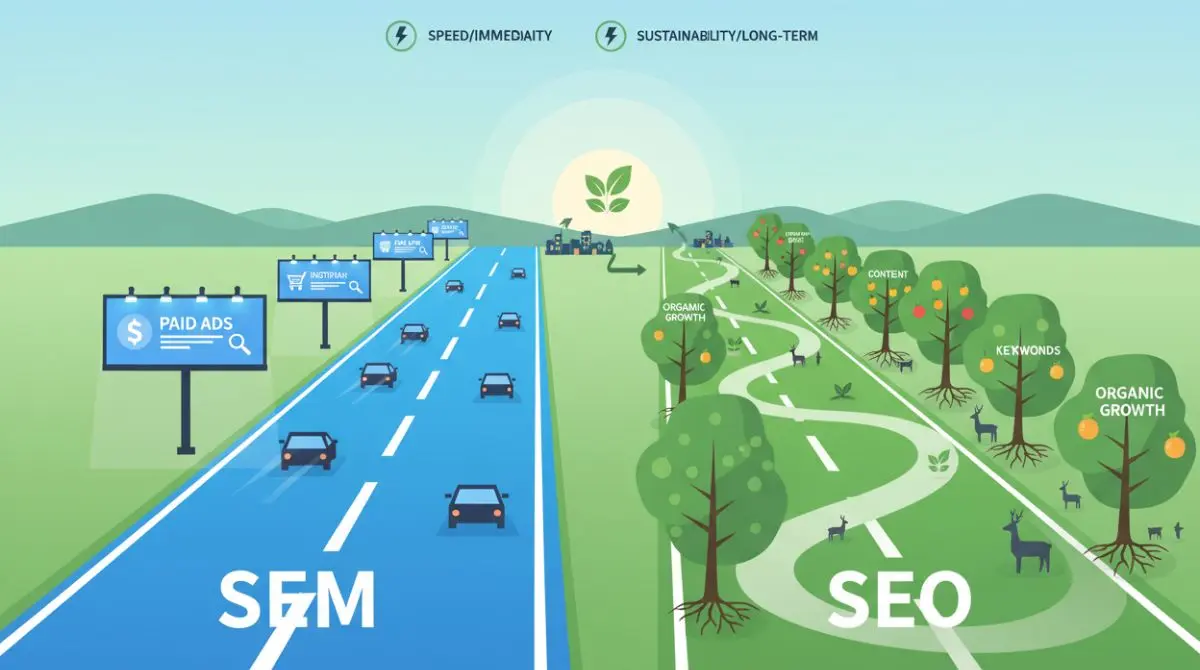
SEO earns placements through relevance, content quality, technical performance and authority signals. SEM buys placements through an auction that considers bid, ad quality and expected experience.
SEM can generate results quickly, but traffic stops when spend stops. SEO compounds over time, but it usually takes longer to see movement on competitive queries.
- Speed: SEM can start producing clicks as soon as campaigns are approved, while SEO typically builds momentum gradually.
- Control: SEM offers tight control over budgets, targeting and ad messaging, while SEO control is indirect and depends on search engine interpretation.
- Costs: SEM costs are tied to clicks or impressions, while SEO costs are tied to labor and tools rather than each visit.
- Coverage: SEM can target high intent terms even when organic rankings are not yet strong, while SEO is best for durable visibility.
When you understand these tradeoffs, you can plan a balanced search strategy rather than treating one channel as a replacement for the other.
How SEM Works Behind The Scenes?

Paid search uses an auction system. When a query happens, the ad platform evaluates eligible advertisers based on targeting, bid and quality factors, then decides which ads appear and in what order.
Your ad rank is not only about paying more. Strong relevance, useful landing pages and high expected engagement can improve placement and lower your effective cost per click.
Key Parts Of a Typical SEM Campaign
SEM campaigns are built from several components that work together. Getting these pieces aligned is the difference between predictable growth and wasted spend.
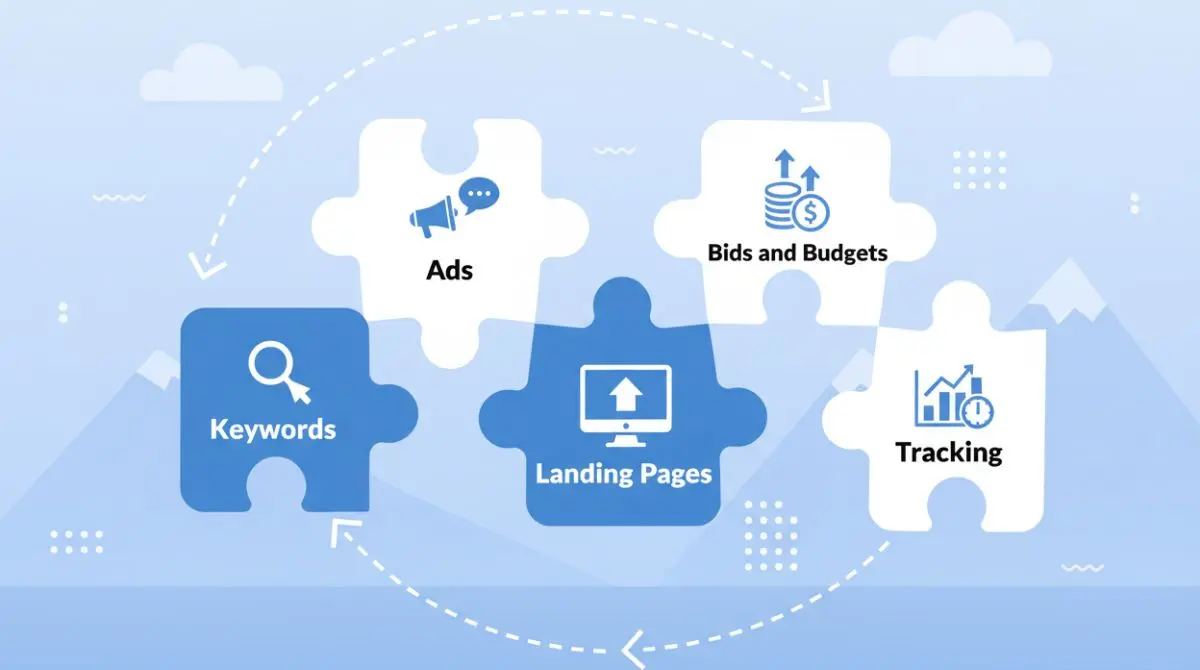
- Keywords: The search terms and match types that define when ads can trigger.
- Ads: The text and extensions that set expectations and drive clicks.
- Landing Pages: The pages that convert visitors and confirm relevance.
- Bids and Budgets: The controls that shape volume, efficiency and pacing.
- Tracking: The measurement layer that ties spend to outcomes and revenue.
Each component influences the others, so optimization should be done as a system rather than isolated tweaks.
Keyword Targeting and Match Types
Keyword selection decides what intent you buy. A good keyword set covers your core commercial terms, supporting problem terms and branded queries where applicable.
Match types control how closely a query must align with your chosen keywords. Tighter matching can protect efficiency, while broader matching can uncover demand and scale volume when paired with strong negatives.
Negative Keywords and Search Terms Management
Negative keywords prevent your ads from showing for irrelevant or low intent queries. This reduces wasted clicks and improves the overall quality of traffic.
Search terms reviews are an ongoing task, not a one time setup. Regular reviews keep your targeting aligned as language, seasonality and competitors shift.
Ad Copy and Ad Extensions
Ad copy should mirror the searcher intent and set a clear next action. Good ads are specific, consistent with the landing page and written to be scanned quickly.
Extensions add extra information such as site links, callouts, structured snippets, or location details. They increase the ad footprint and often lift click through rate without changing bids.
- Relevance: Align terms from the query theme with the headline and description.
- Clarity: State what you offer, who it is for and what happens after the click.
- Trust Signals: Use factual differentiators such as warranties, shipping policies, or certifications when accurate.
- Consistency: Keep promises aligned with what the landing page immediately confirms.
When ad messages and landing pages match tightly, you typically gain both better conversion rates and better quality scores.
Landing Pages and Conversion Rate Optimization

SEM performance is limited by the page users land on. A fast, focused landing page with a clear offer often outperforms a generic homepage even with the same traffic.
Conversion rate optimization focuses on reducing friction and clarifying value. This includes page speed, mobile usability, form design, readability and clear proof points.
Budgeting and Bidding In SEM
Budgeting is about pacing spend to capture enough qualified demand without overspending on marginal clicks. Bidding is about how aggressively you compete in the auction to win impressions and clicks.
Manual bidding offers control and can work well with stable data. Automated bidding uses conversion signals to adjust bids in real time, but it needs clean tracking and sufficient volume to learn reliably.
Common SEM Pricing Models
Different campaign types may use different pricing models. The model you choose should match the goal you are optimizing toward.
- Cost Per Click: You pay when someone clicks, common for search ads focused on traffic and conversions.
- Cost Per Thousand Impressions: You pay for exposure, often used for awareness oriented placements.
- Cost Per Acquisition: You target a cost for a conversion when tracking is reliable.
Regardless of model, the real measure is unit economics such as cost per lead, cost per sale and lifetime value alignment.
How To Measure SEM Performance?
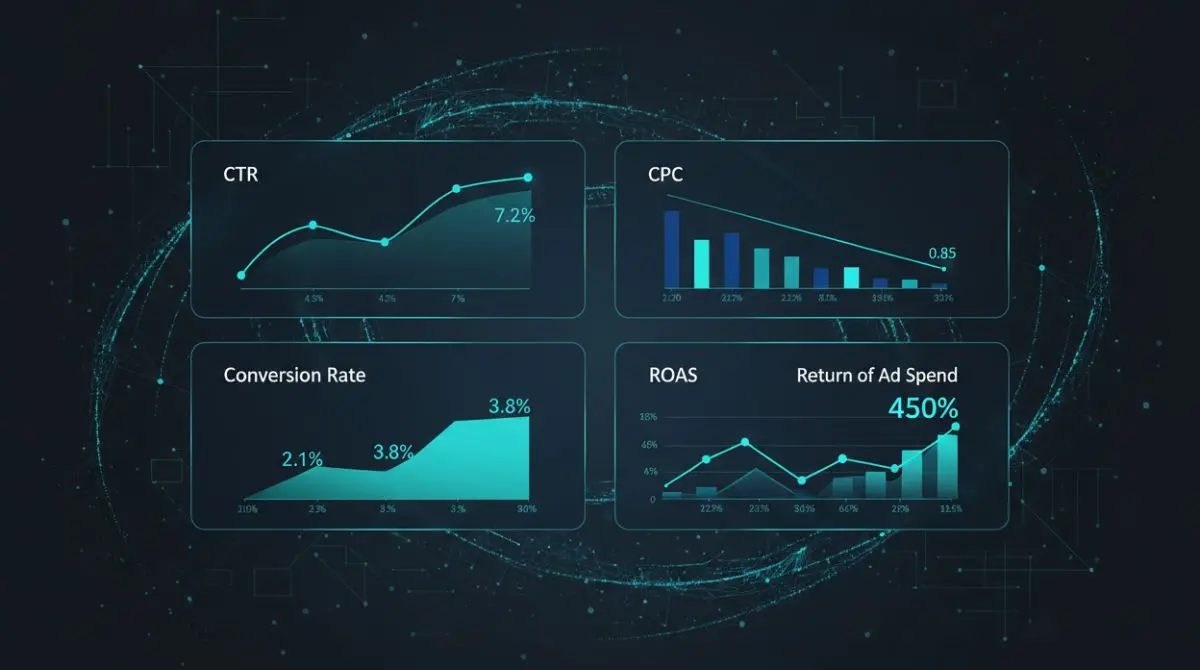
Measurement starts with defining what success means for your business. Clicks alone are rarely the goal, so you need conversion tracking that reflects qualified actions and revenue impact.
At minimum, track conversions, conversion value when possible and the quality of leads or orders downstream. This is how you avoid optimizing for cheap clicks that do not produce outcomes.
| Metric | What It Tells You | How to Improve |
|---|---|---|
| Click Through Rate | How compelling your ad is for a query theme | Tighten keyword groups, improve headlines, add useful extensions |
| Cost Per Click | How expensive each visit is in the auction | Improve quality signals, refine targeting, reduce wasted impressions |
| Conversion Rate | How often clicks turn into desired actions | Improve landing page speed, clarity and alignment with intent |
| Return On Ad Spend | Revenue efficiency relative to spend | Prioritize high value queries, fix tracking, optimize bids to value |
These metrics work best when reviewed together. A single number can look good while hiding issues such as poor lead quality or weak margins.
Common SEM Mistakes to Avoid
Many SEM problems come from rushing setup or optimizing the wrong objective. Preventable errors tend to show up as wasted spend, low relevance and inconsistent results.
- Sending all traffic to one page: Users convert better when the page matches the keyword intent and ad promise.
- Ignoring negatives: Without negatives, irrelevant queries can quietly consume budget.
- Overly broad targeting: Broad reach without guardrails often lowers conversion rate and inflates cost.
- Weak tracking: Missing or duplicated conversions lead to poor bid decisions and misleading reports.
- Judging too quickly: Auction dynamics and learning periods require enough data before major changes.
Fixing fundamentals usually unlocks improvement faster than chasing advanced tactics.
How To Build a Solid SEM Strategy?
A strong SEM strategy starts with clear goals and clean measurement, then builds targeting and creative around real search intent. Keep the structure simple enough to manage, but specific enough to stay relevant.
Use tight keyword themes, consistent ad messaging and landing pages designed for the same intent. Review search terms, budgets and conversion quality regularly to keep performance stable.
- Define outcomes. Choose primary conversions and decide how value will be assigned to each action.
- Map intent. Group keywords by meaning, not just by product names and separate brand from non brand when appropriate.
- Build aligned assets. Write ads that match each intent group and connect them to relevant landing pages.
- Launch with guardrails. Set realistic budgets, add initial negatives and start with targeting that protects relevance.
- Optimize on value. Use performance data to shift spend toward profitable queries and improve conversion rate.
This process keeps SEM manageable and reduces the risk of spending heavily before the system is ready to scale.
Conclusion
SEM is paid search marketing that uses an auction to place ads in front of people who are actively looking for answers, products, or services. It works best when keywords, ads, landing pages and tracking are built as one connected system.
When you measure the right outcomes and keep relevance high, SEM becomes a reliable channel for quick visibility and predictable acquisition. Combine disciplined targeting with ongoing optimization to protect efficiency as you grow.