
Search engines reward pages that solve a real problem quickly, clearly, and completely. Content quality and usefulness in SEO has become the practical standard for earning stable rankings because it aligns with what people actually want to read and use.
Helpful content is not a slogan or a checklist. It is the outcome of understanding intent, providing accurate information, and making the experience easy from headline to next step.
What Content Quality Means For SEO?
Quality is the combination of accuracy, completeness, clarity, and credibility. A high-quality page answers the query without forcing extra searching, and it does so in language that matches the reader’s skill level.
Search systems can infer quality through patterns that reflect real satisfaction. Those signals often show up as strong engagement, consistent topical focus, and fewer signs of manipulation.
How Usefulness Aligns With Search Intent?
Usefulness starts with intent matching, then it expands into task completion. A useful page helps the reader decide, compare, learn, or act without friction.
This is why thin content struggles even when it is optimized. If the content does not meet intent, rankings tend to fluctuate because the page fails the usefulness test at scale.
Helpful Content Signals That Support Rankings
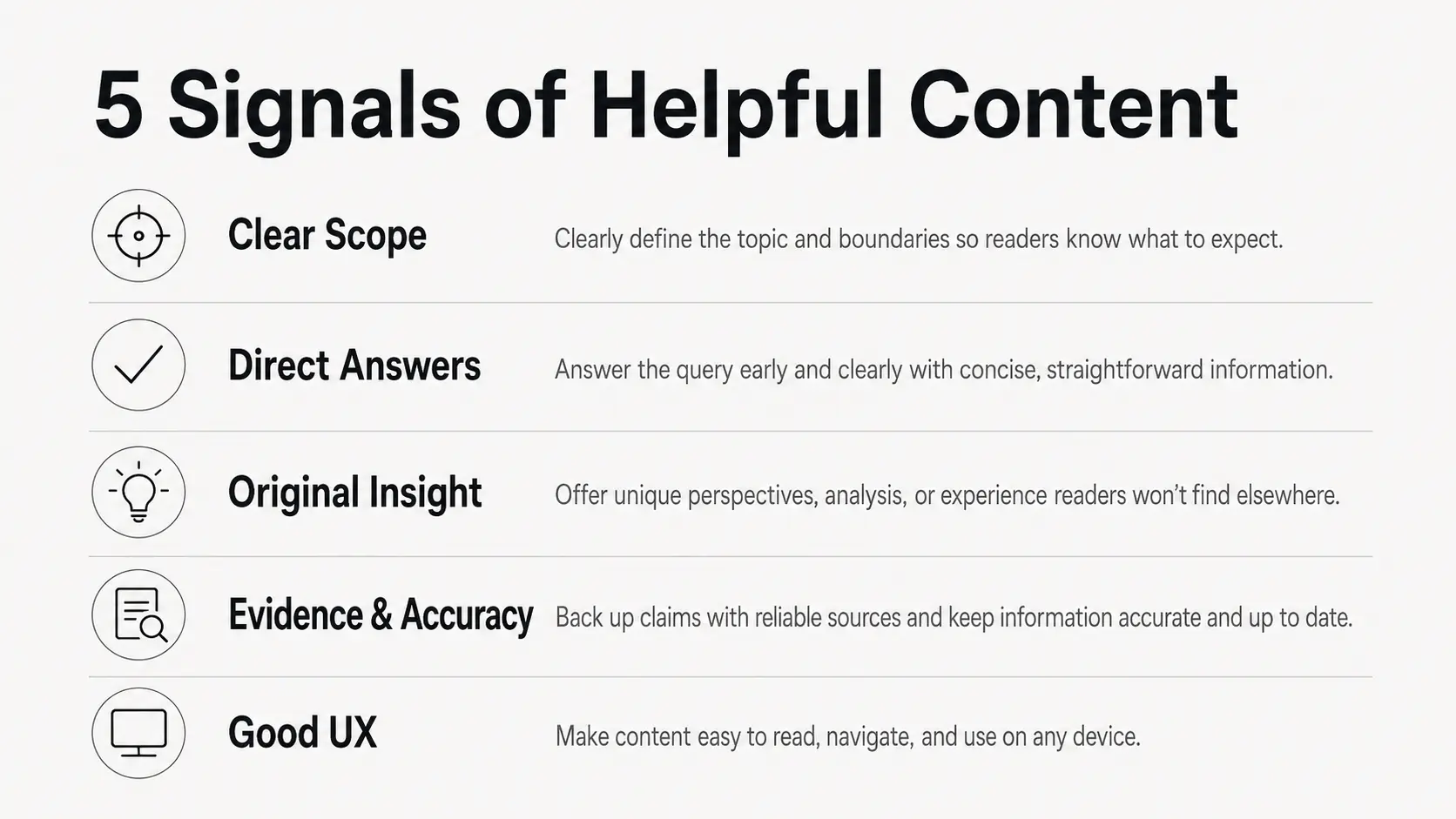
Ranking systems look for evidence that content was created for people rather than for algorithms. You can support that goal by building pages that are specific, verifiable, and structured around real questions.
Helpful pages also tend to reduce pogo-sticking and increase time-to-value. That user satisfaction often correlates with better performance across many related queries.
- Clear scope: The page defines what it covers and what it does not, so readers trust the boundaries.
- Direct answers: Key takeaways appear early, then the page expands with context and details.
- Original insight: The writing adds perspective through experience, analysis, or a clear process.
- Evidence and accuracy: Claims are cautious, consistent, and easy to validate internally.
- Good UX: Scannable sections, readable formatting, and helpful navigation support comprehension.
When these elements work together, the content feels reliable and complete. That reliability is the foundation for sustainable organic traffic.
E E A T In Practice For Content Teams
E E A T is expressed through what you publish and how you maintain it. Expertise is visible in precise definitions, correct terminology, and accurate recommendations that respect edge cases.
Experience shows up as practical guidance that anticipates mistakes and constraints. Authority and trust grow when pages are consistent, updated, and supported by transparent ownership and editorial standards.
- Author accountability: Show who created the content and who reviewed it when accuracy matters.
- Editorial policy: Document sourcing rules, fact-checking habits, and update cadence.
- Topical consistency: Keep the site focused on areas where you can genuinely help.
- Maintenance: Refresh outdated sections and remove content that no longer serves users.
These practices reduce risk when algorithms get stricter about low-value pages. They also increase reader confidence, which improves conversions and repeat visits.
On Page SEO That Improves Usefulness
On-page SEO works best when it supports comprehension rather than forcing keywords into sentences. Good on-page structure helps both readers and crawlers understand what the page is about.
Focus on descriptive headings, predictable information order, and simple language. When the page is easy to navigate, it is easier to trust.
- Titles and headings: Use specific phrases that match intent and summarize the section clearly.
- Intro clarity: State the problem and the solution path within the first few lines.
- Internal structure: Group related subtopics so readers can scan and still get the full message.
- Definition first: Introduce new terms before using them in recommendations.
- Accessible formatting: Short paragraphs, consistent terminology, and concise lists improve readability.
These on-page decisions often raise perceived quality immediately. They also make it simpler to expand the content later without losing coherence.
Content Depth Without Keyword Stuffing
Depth comes from covering the topic fully, not from repeating the same phrase. A strong page includes related subtopics, constraints, and decision criteria that a serious reader expects.
Semantic SEO helps here because it encourages natural language and related entities. When you write about helpful content, related ideas like user intent, information gain, topical authority, content freshness, and satisfaction signals fit naturally.
| Quality Factor | What It Looks Like On The Page | SEO Benefit |
|---|---|---|
| Intent Match | Direct answers and a clear path to completion | Higher relevance and stronger query coverage |
| Information Gain | Unique details that reduce the need for extra searches | Better differentiation within competitive results |
| Credibility | Consistent facts, careful claims, transparent ownership | Improved trust signals and fewer quality concerns |
| User Experience | Readable layout, clean structure, fast time-to-value | Better engagement and more durable rankings |
Use the table as a quick audit lens for existing pages. It keeps content depth tied to user outcomes instead of keyword repetition.
How To Audit And Upgrade Existing Content?
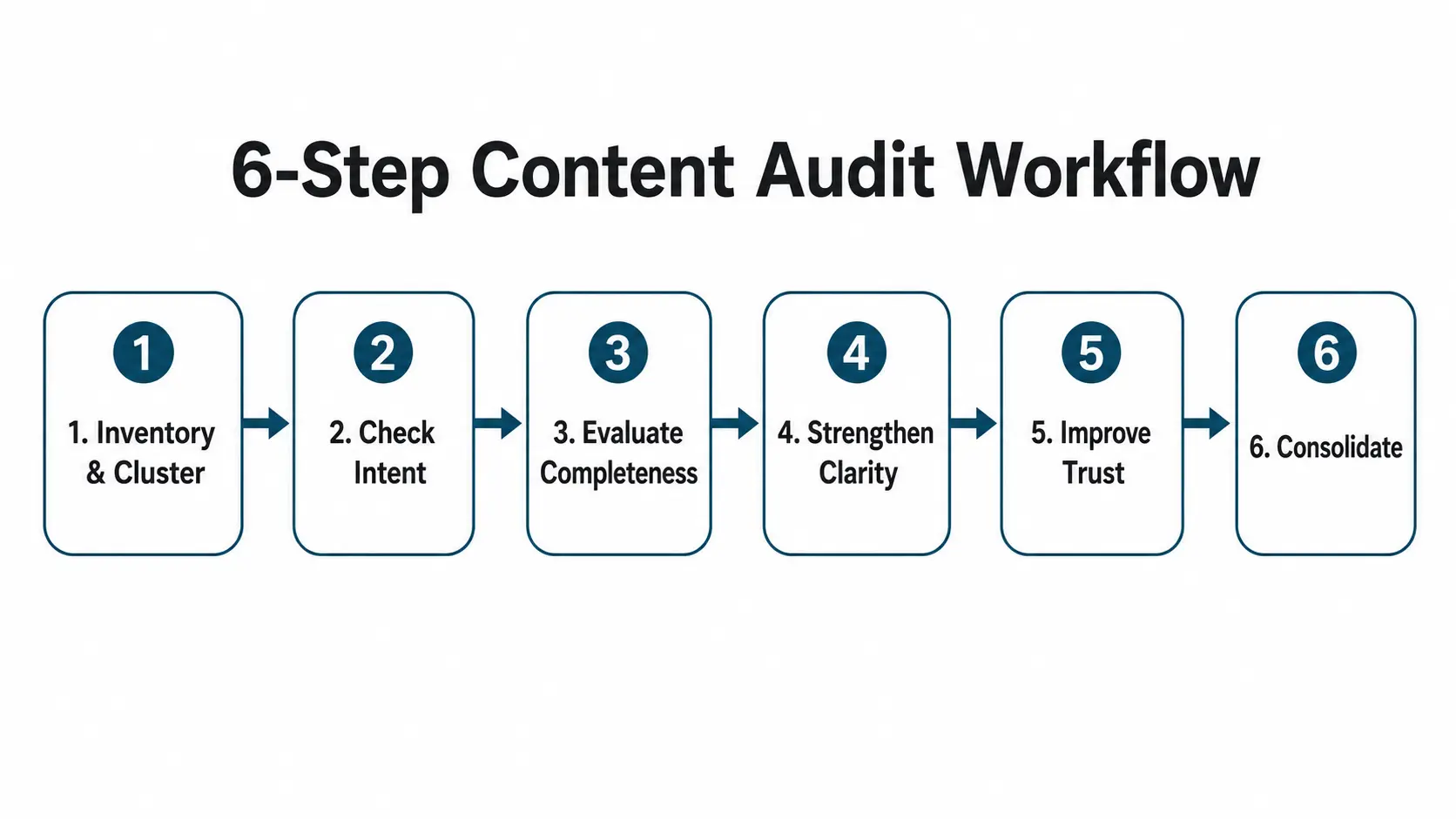
Content decay often comes from outdated sections, shifting intent, or competing pages that confuse search engines. A consistent audit process helps you prioritize fixes that increase usefulness.
Keep the workflow simple and repeatable so it scales across categories. The goal is to create fewer, stronger pages rather than maintaining many weak ones.
- Inventory and cluster. Group pages by topic and intent, then identify overlap and gaps.
- Check intent alignment. Confirm each page matches the query type and the reader’s next decision.
- Evaluate completeness. Add missing subtopics, constraints, and definitions that block understanding.
- Strengthen clarity. Rewrite vague sections, improve headings, and reduce repetition.
- Improve trust elements. Add transparent authorship, update notes, and consistent terminology.
- Consolidate when needed. Merge competing pages and use a single canonical source for each intent.
After upgrades, monitor performance over a full evaluation period rather than reacting daily. Useful content tends to improve steadily as search systems reprocess the changes.
Common Mistakes That Reduce Helpfulness
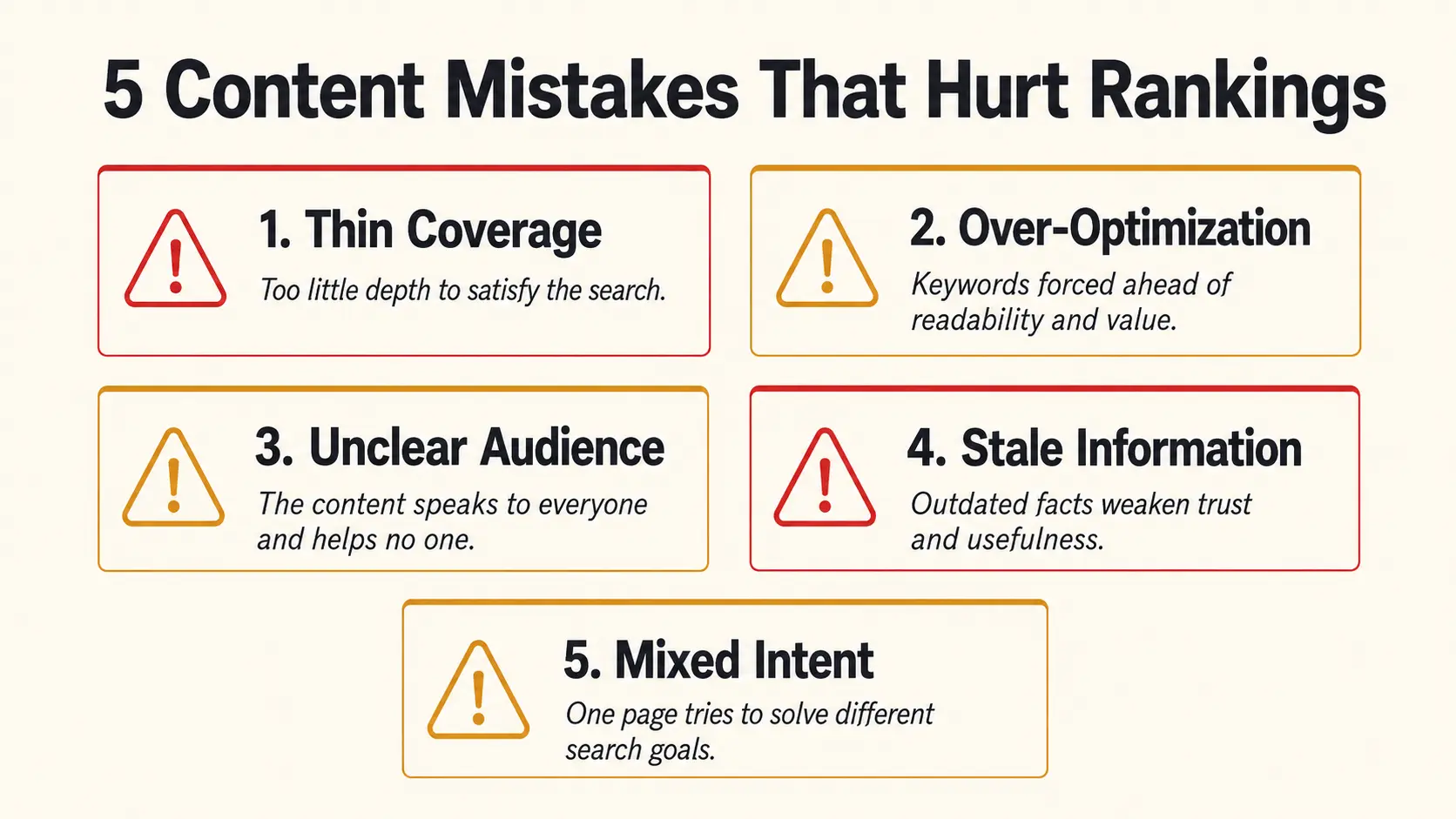
Many pages underperform because they look optimized but feel empty. Readers notice when content is padded, evasive, or written to satisfy a template instead of a person.
Avoid these patterns to protect both rankings and trust.
- Thin coverage: The page answers only the surface question and ignores obvious follow-ups.
- Over-optimization: Repeated phrases, forced subheadings, and unnatural wording reduce readability.
- Unclear audience: The content switches between beginner and advanced guidance without signaling it.
- Stale information: Outdated recommendations remain published even after the topic evolves.
- Mixed intent: Informational sections and sales messaging compete, so neither fully works.
Fixing these issues usually improves conversions as well as search performance. Helpfulness is a business advantage, not only an SEO tactic.
Measuring Usefulness With Practical Metrics
You do not need perfect attribution to evaluate content quality. You need a consistent set of indicators that reflect satisfaction and task completion.
Use a mix of search and on-site signals, and review them alongside qualitative checks. This keeps you from optimizing for a single metric that can be misleading.
- Query coverage: Growth in impressions and clicks across related long-tail searches.
- Engagement quality: Time on page paired with scroll depth and meaningful interactions.
- Return behavior: Repeat visits and branded search lift tied to the topic area.
- Conversion alignment: Higher completion rates on the next logical step for that intent.
- Content health: Fewer pages with declining traffic due to duplication or staleness.
When usefulness improves, these signals typically move together. That pattern is more reliable than chasing isolated spikes.
Conclusion
Content quality and usefulness in SEO improves rankings by meeting intent, building trust, and delivering real information gain. Helpful content performs because it is easy to understand, accurate, and structured around what readers need to do next.
Prioritize clarity, depth, and maintenance, then audit regularly to remove or upgrade weak pages. Over time, a helpful content system becomes a defensible advantage that supports visibility through algorithm changes.