
Search engines reward sites that publish useful pages, keep them technically clean and update based on real performance data. A practical SEO workflow turns that ongoing work into a repeatable routine so improvements compound instead of resetting each month.
This guide focuses on actions that directly affect crawling, indexing, relevance and satisfaction signals. The goal is simple – build a workflow that consistently improves rankings without guesswork.
Workflow Principles That Keep SEO Work Focused
SEO work gets messy when tasks are picked based on urgency instead of impact. A workflow prevents that by forcing each action to map to a ranking driver such as content quality, internal linking or page experience.
It also protects time for maintenance work that rarely feels urgent, such as broken link cleanup and cannibalization checks. Those small issues quietly limit growth if ignored.
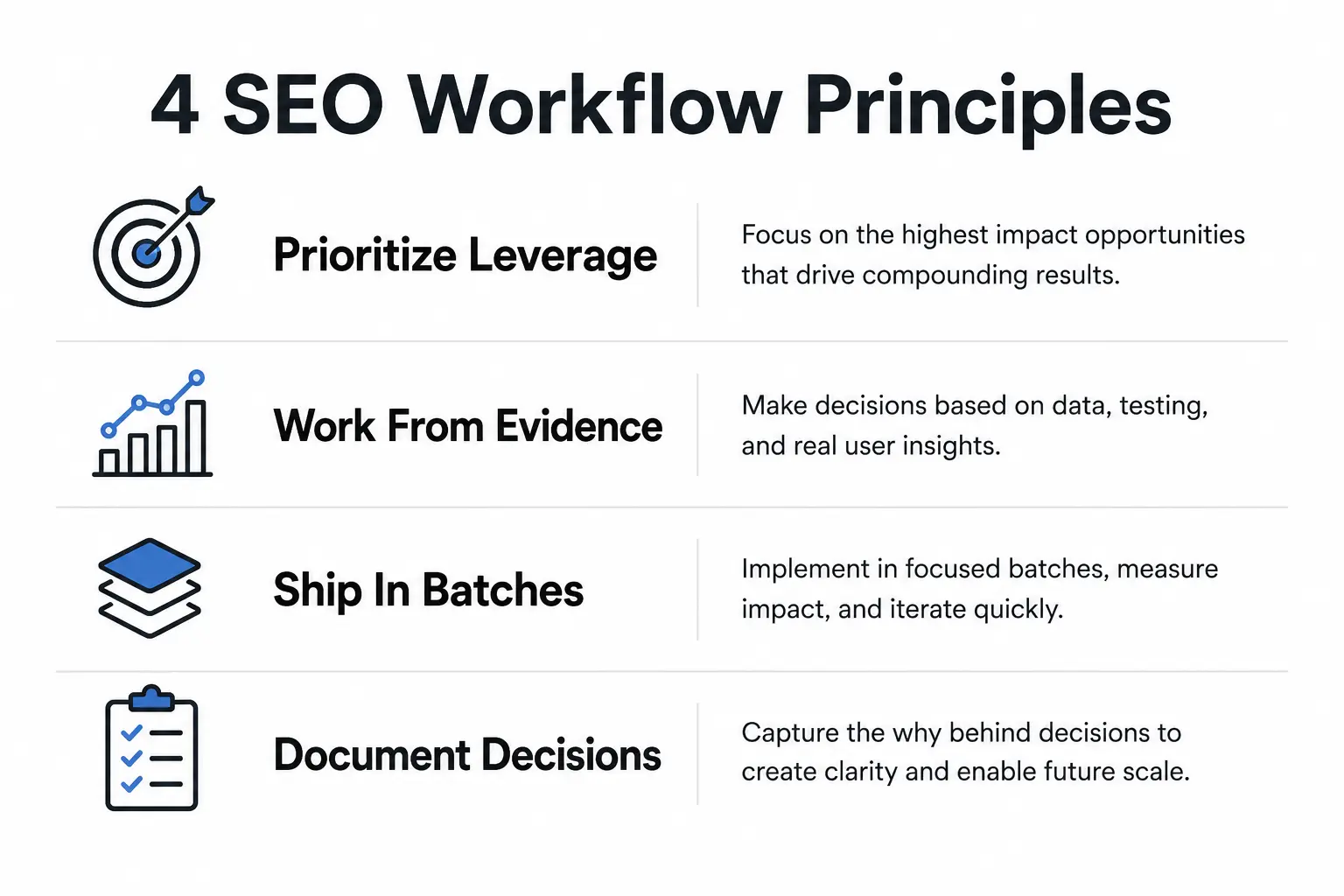
- Prioritize leverage: Choose tasks that improve multiple pages at once, such as templates, navigation and internal link patterns.
- Work from evidence: Use crawl data, Search Console, and analytics before rewriting pages or changing site structure.
- Ship in batches: Group similar changes so outcomes are easier to measure and roll back if needed.
- Document decisions: Keep a simple change log so ranking shifts can be traced to real updates.
With these principles in place, the workflow stays stable even when priorities shift.
Baseline Setup Before You Optimize
Rankings improve faster when measurement is reliable. Confirm tracking is accurate, access is in place, and the site can be crawled without unnecessary friction.
This baseline prevents wasted time when performance changes but the data cannot explain why. It also reduces the chance of making technical changes that hide problems rather than fixing them.
- Search Console readiness: Verify all key site versions and submit updated sitemaps.
- Analytics alignment: Ensure conversions and key engagement events are tracked consistently.
- Crawlability checks: Review robots directives, index controls and canonical behavior for core templates.
- Core page inventory: Maintain a list of priority pages, their intent and current performance baselines.
After the baseline is clean, you can diagnose issues with confidence.
Keyword Research and Search Intent Mapping
Keyword research works best when it starts with intent, not volume. Each target query should map to a page type that satisfies the searcher quickly and completely.
Cluster topics into themes and identify the primary page that should rank for each cluster. This reduces keyword cannibalization and makes internal linking decisions easier.
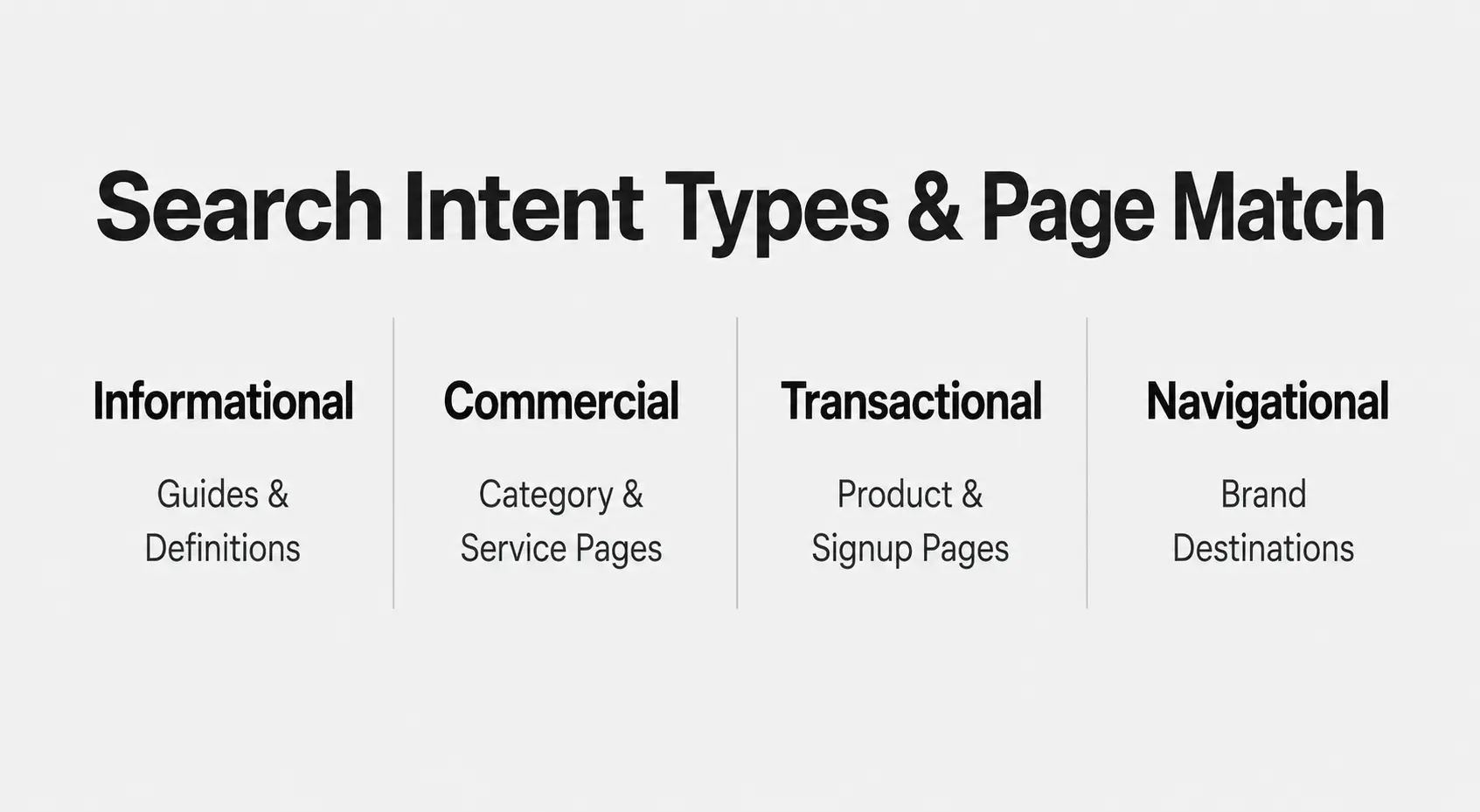
- Informational intent: Build guides, definitions, comparisons and troubleshooting pages.
- Commercial intent: Use category pages, service pages and solution overviews with clear differentiation.
- Transactional intent: Optimize product or signup pages for clarity, trust and frictionless completion.
- Navigational intent: Ensure brand and key destinations are easy to find and clearly labeled in titles.
Once intent is mapped, the next step is a content audit that shows what to keep, improve, merge, or retire.
Content Audit and Opportunity Scoring
A content audit reveals which pages are already close to winning and which are holding the site back. Review each important URL for performance, freshness, depth and alignment with intent.
Use a consistent scoring approach to avoid bias. A page with modest traffic but strong conversion rate can be more valuable than a high traffic page with no meaningful outcomes.
| Audit Signal | What To Check | Recommended Action |
|---|---|---|
| Index Coverage | Indexed status, canonical choice, excluded reasons | Fix technical blockers and consolidate duplicates |
| Query Match | Top queries align with page intent and headings | Rewrite sections to satisfy intent and tighten focus |
| Content Quality | Completeness, clarity, accuracy, unique value | Add missing sections and remove thin or repetitive text |
| Engagement | Time on page, scroll depth, conversion actions | Improve formatting, internal links, and calls to action |
Use the audit to build a prioritized backlog rather than jumping to edits immediately.
On Page SEO That Improves Relevance
On page SEO is where intent mapping becomes visible to both users and search engines. Strong pages communicate topic focus quickly through titles, headings and early on page context.
Keep changes consistent across templates to avoid uneven quality. When a site has hundreds of pages, small improvements repeated across templates usually outperform one perfect page.
- Title tags: Lead with the main topic, add a clear qualifier and keep phrasing readable.
- Meta descriptions: Write benefit driven summaries that match intent and set expectations.
- Heading structure: Use one clear main heading and logical subheadings that reflect the topic outline.
- First screen clarity: Explain who the page is for, what it covers and what action to take next.
- Internal links: Link to supporting pages with descriptive anchor text that matches the destination intent.
After relevance is improved, technical health ensures those pages can be crawled, rendered and trusted.
Technical SEO Checks That Prevent Ranking Loss
Technical SEO is not just for large sites. Even small sites lose rankings when crawl budget is wasted on duplicate URLs or when index controls conflict.
Focus on issues that change how search engines discover and interpret content. Keep fixes simple and verify outcomes with a recrawl after deployment.
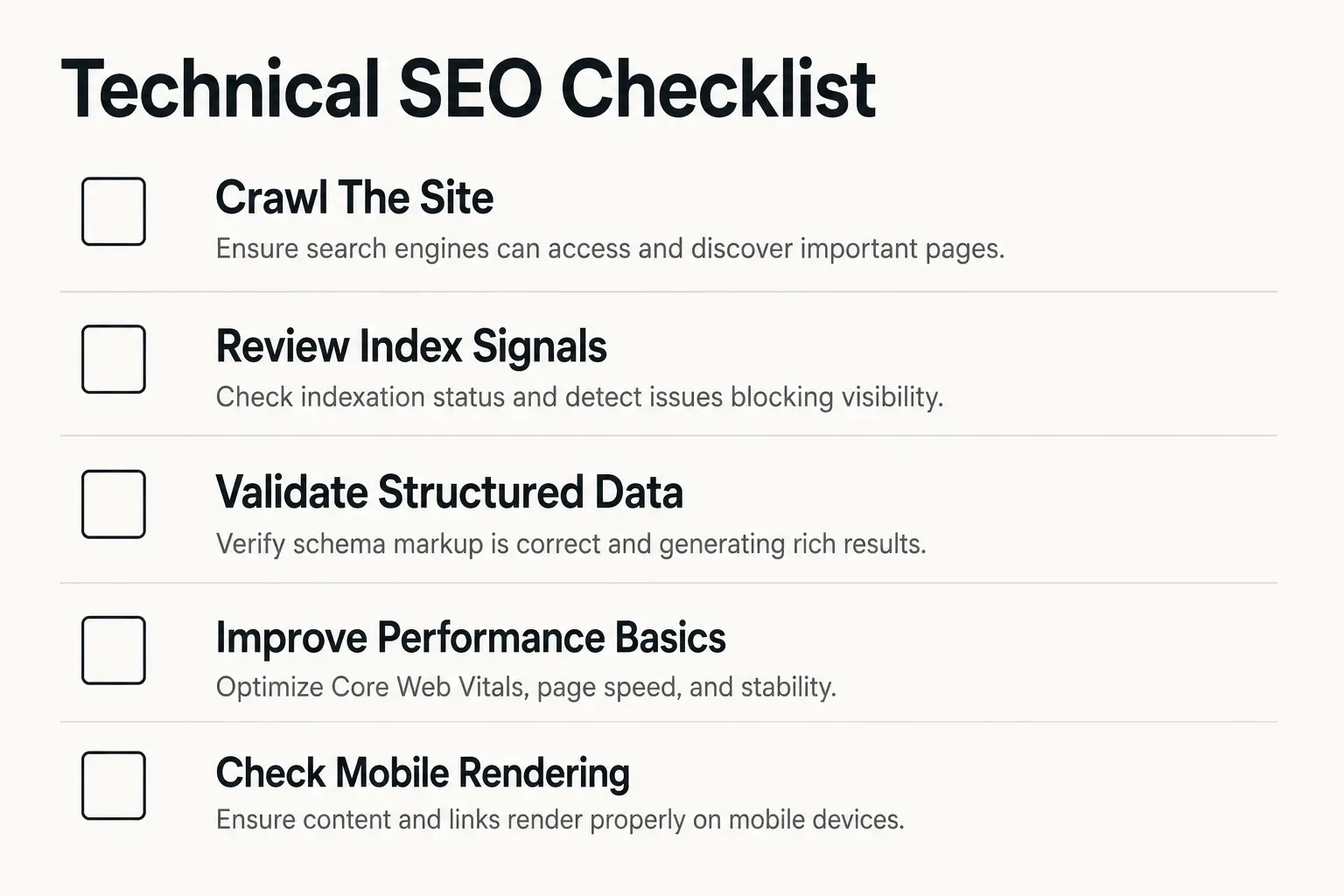
- Crawl the site. Identify broken links, redirect chains, duplicate titles, and thin pages that create noise.
- Review index signals. Confirm canonicals, noindex rules and sitemap entries agree on which URLs should rank.
- Validate structured data. Use only relevant schema types and keep properties consistent with visible content.
- Improve performance basics. Reduce heavy scripts, compress images and stabilize layout to support page experience.
- Check mobile rendering. Ensure navigation, accordions and key content work without hidden critical text.
Once the foundation is stable, authority signals and internal structure help the right pages rise.
Internal Linking and Site Architecture
Internal linking shapes how authority flows and how topics are understood. A clear architecture also helps users move from general information to specific solutions without dead ends.
Group related pages into hubs and connect them with consistent navigation paths. This makes it easier to maintain topical depth while avoiding isolated pages.
- Topic hubs: Create a central page per theme that summarizes subtopics and links outward.
- Contextual links: Add links inside paragraphs where they genuinely help the reader take the next step.
- Breadcrumbs: Support crawl paths and improve usability on deep structures.
- Orphan cleanup: Ensure every indexable page has at least one strong internal link pointing to it.
After internal flow is improved, external authority efforts become more effective.
Off Page Signals and Trust Building
Off page SEO supports rankings by building credibility and discovery. The safest path is earning mentions and links through useful resources, strong brand presence and clear expertise signals.
Focus on quality over quantity. A few relevant mentions from credible sites can outweigh many low trust links that risk long term instability.
- Digital PR assets: Publish original resources, research or tools that deserve citation.
- Partner mentions: Build co-marketing pages, supplier directories and association listings where relevant.
- Author credibility: Add clear author bios, editorial review notes and update policies for sensitive topics.
- Brand consistency: Keep naming, address data and positioning consistent across trusted profiles.
When trust signals improve, measurement keeps the workflow honest and prevents busywork.
Tracking, Reporting and Iteration
SEO gains come from iterative improvements, not one time fixes. Track leading indicators such as impressions and crawl errors and lagging indicators such as conversions and qualified leads.
Report on what changed, what moved and what will be tested next. Keep reporting tight so decisions happen quickly.
- Define key metrics. Choose a small set including organic clicks, top query positions, conversions and index coverage.
- Review weekly signals. Watch for crawl spikes, sudden drops and pages losing impressions.
- Run monthly content refreshes. Update key pages with new sections, clearer answers and improved internal links.
- Log deployments. Track releases by date, template and affected URLs to connect cause and effect.
Iteration is easier when roles and handoffs are clear across content, dev and stakeholders.
Conclusion
A practical SEO workflow improves rankings by combining intent driven content, strong on page signals, technical stability and trustworthy authority building. When each cycle starts with data and ends with measurement, the site steadily becomes easier to crawl, easier to understand and more satisfying to users.
Keep the process consistent, document changes and prioritize tasks that remove friction for both users and search engines. Over time, small focused improvements create durable ranking gains.