
Ranking in SEO is the position a web page earns on a search engine results page for a specific query. Higher rankings usually bring more visibility, more qualified clicks and more trust from searchers.
Ranking is not a single score. It is the outcome of many systems that interpret the query, evaluate pages and decide which results best satisfy the intent.
How Search Engines Choose Search Results?
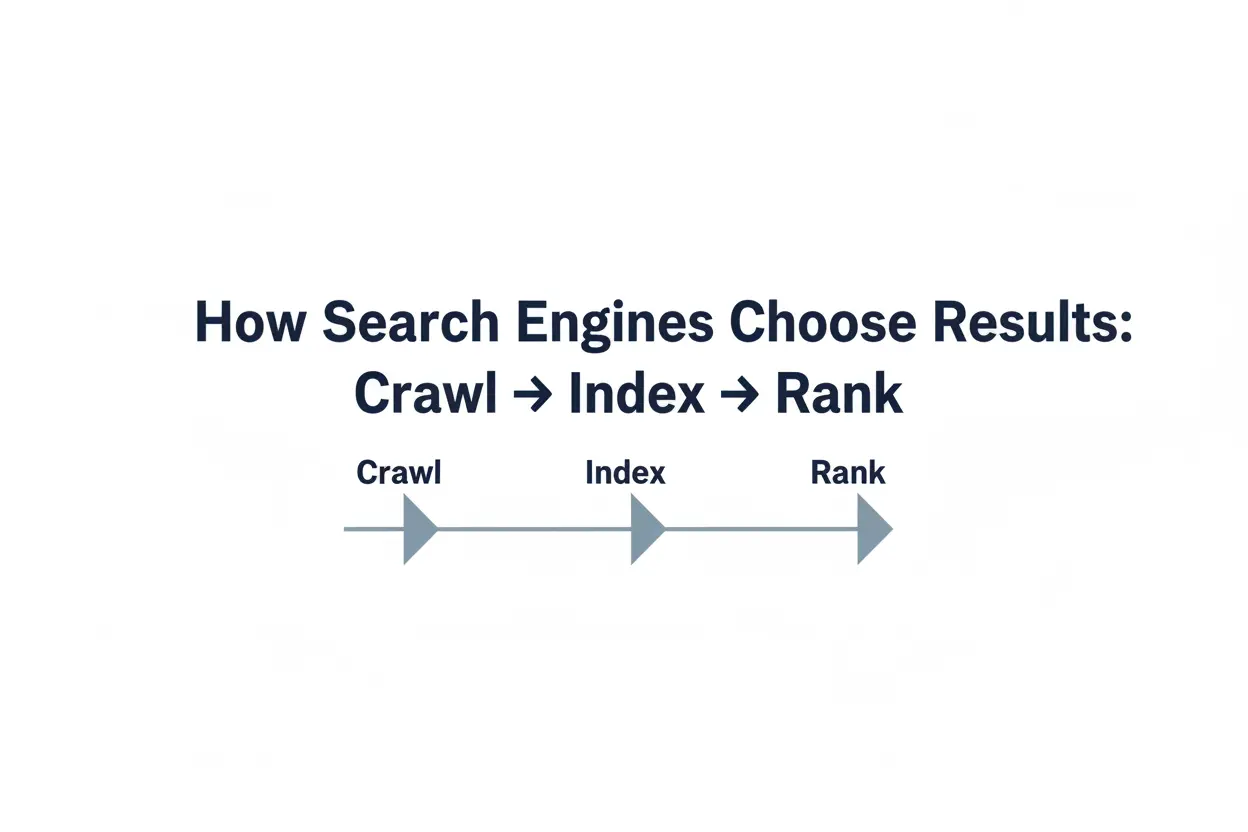
Search engines work through a set of core functions that turn the open web into organized results. These functions run at massive scale and continuously update as pages change.
Most ranking outcomes come down to relevance, quality and usability. When two pages look similarly relevant, the better overall experience and stronger signals tend to win.
Crawling and Discovery
Crawling is how search engines find pages by following links and reading sitemaps. If a page is not discovered, it cannot rank, no matter how strong the content is.
Discovery depends on internal links, external links, clean URL structures and a site that loads reliably. Frequent publishing and strong site architecture can also increase crawl attention.
Indexing and Understanding Content
Indexing is the process of storing and organizing a page so it can be retrieved for relevant searches. During indexing, search engines interpret text, headings, images and structured signals to understand topics and entities.
Clear information hierarchy helps. Descriptive titles, helpful subheadings and straightforward language reduce ambiguity and improve the chance that the page is indexed for the right queries.
Ranking Signals Search Engines Evaluate
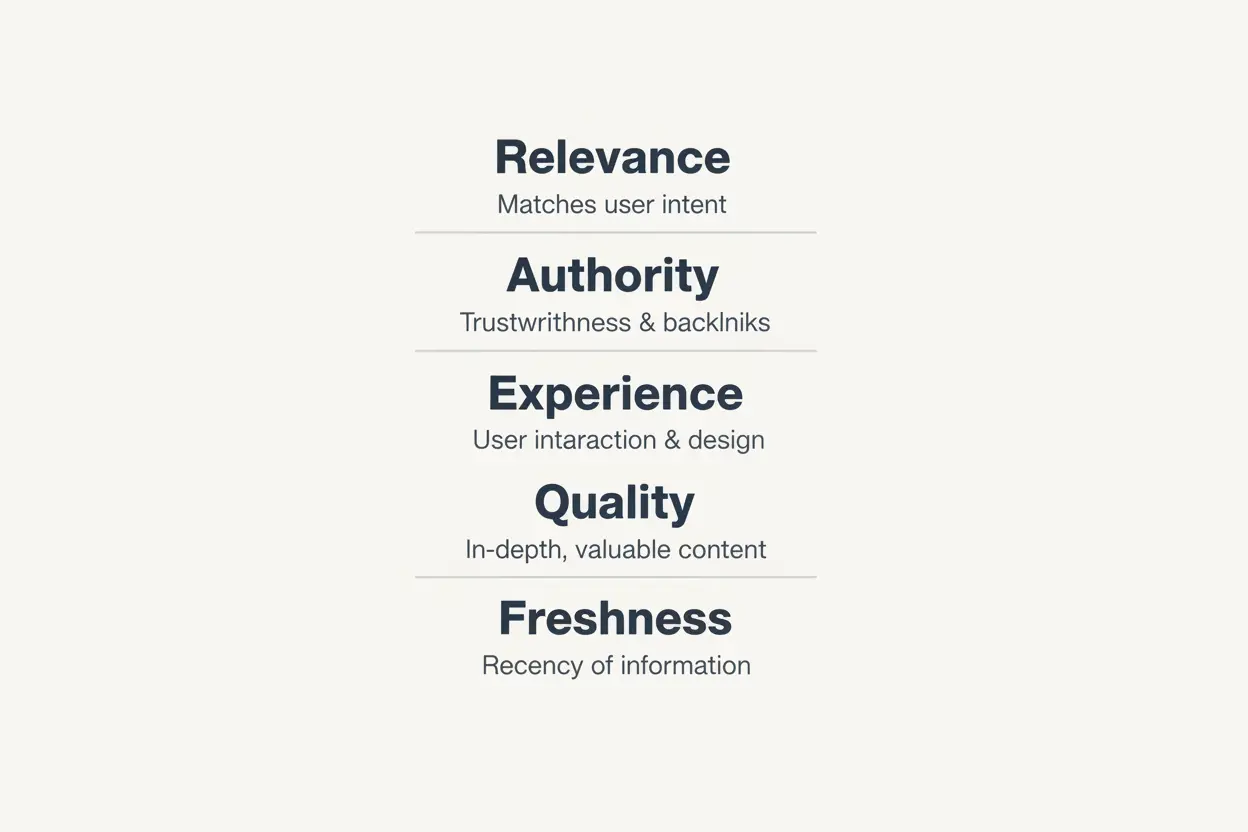
Ranking signals are measurable inputs that help systems choose which page deserves which position. No site controls every signal, but many are influenced through strong SEO fundamentals.
The most important signals tend to fall into a few practical groups that map to how people judge a page. These groups also align with what search engines can validate at scale.
- Relevance Signals: How closely the page matches the query through topics, entities and on-page cues.
- Authority Signals: Evidence that others trust the page or site, often reflected in link quality and mentions.
- Experience Signals: Page speed, mobile usability, readability and how smoothly users can complete tasks.
- Quality Signals: Originality, depth, accuracy and whether the content satisfies intent without unnecessary padding.
- Freshness Signals: How recently content was updated when recency matters for a query.
These buckets overlap in real scoring systems. Improving one area often lifts others, such as better content structure helping both relevance and experience.
Relevance and Search Intent
Relevance is the baseline requirement for ranking. Search engines try to understand what the searcher wants and then select pages that best match that intent.
Intent commonly falls into informational, navigational, commercial, or transactional needs. Pages that align their content format and depth to intent usually perform better than pages that only repeat keywords.
Content Quality and Originality
Quality content answers the query fully, stays accurate and adds clear value beyond generic summaries. Originality can show up through firsthand experience, unique insights, proprietary data, clear frameworks, or careful explanations that reduce confusion.
Thin pages often fail because they do not resolve the task behind the search. Content that is broad but shallow can also struggle, since it signals low usefulness.
Expertise Authority and Trust Signals
EEAT is not one simple metric, but a set of signals that reflect credibility. Search engines look for indicators that content is produced with care, backed by knowledge and presented transparently.
Practical trust signals include clear author information, accurate claims, up to date pages and consistent site reputation. For topics where accuracy is critical, stronger sourcing and editorial standards matter more.
Links and Site Reputation
Links act as a form of endorsement, helping search engines estimate reputation. A smaller number of high quality, relevant links usually helps more than a large number of weak links.
Internal links also matter because they distribute value across a site and help crawlers find important pages. A clean internal linking strategy clarifies which pages are most essential.
User Experience and Technical Performance
User experience affects ranking both directly and indirectly. A page that loads fast, works well on mobile and is easy to navigate tends to retain visitors and reduce friction.
Technical SEO supports these goals through sound architecture, secure connections, valid status codes and stable rendering. When a site is slow or unstable, it can weaken crawl efficiency and reduce satisfaction.
On Page SEO Elements That Influence Ranking
On page SEO helps search engines interpret what a page is about and how it should be classified. It also helps users scan quickly and find answers without effort.
- Title Tag and Headings: Clear topic alignment and natural language that reflects real queries.
- Topical Coverage: Supporting subtopics that complete the subject rather than repeating the main phrase.
- Internal Links: Contextual paths to related pages and key conversion pages.
- Media and Alt Text: Helpful visuals with descriptive alt text when images add meaning.
- Schema Markup: Structured data that clarifies entities such as products, organizations and articles.
Strong on page work is specific and restrained. Over optimization can reduce clarity and make content feel unnatural.
Why Rankings Change Over Time?
Rankings fluctuate because the web changes and search engines adjust how they interpret queries. Competitors update content, new pages appear and user expectations evolve.
Algorithm updates also reshape which signals matter most for certain queries. Sites that focus on durable quality and usability tend to be more resilient than sites built around shortcuts.
Ranking Factors Compared in One View
The table below summarizes common ranking drivers, what they indicate and what to improve. Use it as a quick diagnostic when a page underperforms.
| Ranking Area | What it Signals | High Impact Improvements |
|---|---|---|
| Relevance And Intent Match | Query satisfaction and topical alignment | Refine headings, add missing subtopics, align format to intent |
| Content Quality | Usefulness, depth and clarity | Answer key questions, remove fluff, add unique insights and clear structure |
| Authority And Links | Reputation and confidence | Earn relevant editorial links, strengthen internal linking, improve brand credibility |
| Technical And UX | Speed, crawlability and usability | Improve Core Web Vitals, fix indexation issues, optimize mobile experience |
Use these categories together rather than in isolation. A strong page usually wins because it is solid across multiple areas.
How to Improve Ranking In SEO Without Guesswork?
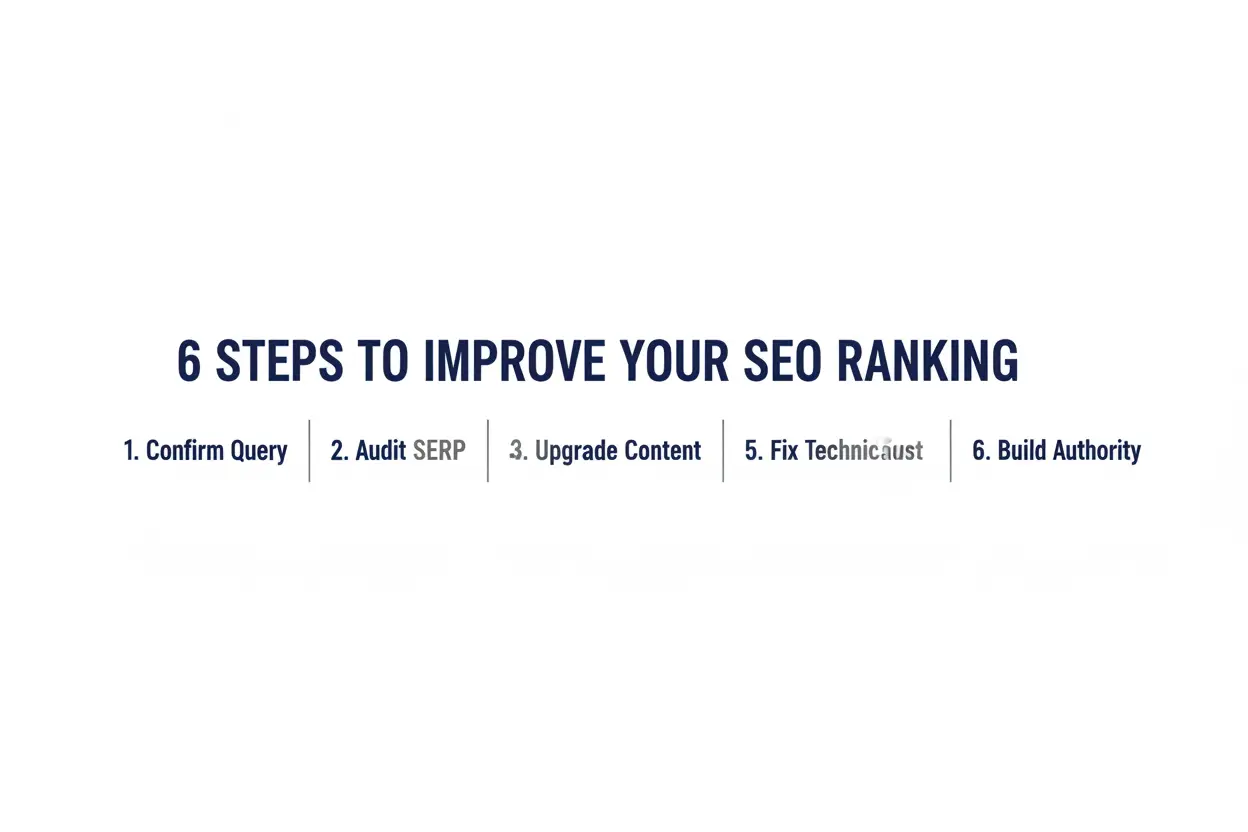
Improving ranking is easier when the work follows a consistent process. The goal is to identify why a page is not the best result and then remove that gap.
Start with the query intent and the competitive set, then move through content and technical checks. Each pass should lead to a measurable improvement.
- Confirm The Target Query. Choose one primary query per page and ensure the page fully serves that intent.
- Audit The Current SERP. Review the dominant content types, depth and common subtopics shown in top results.
- Upgrade Content Structure. Improve headings, scanning and topical completeness so answers appear quickly and clearly.
- Strengthen Trust Signals. Add author transparency, editorial standards and accurate claims that reduce doubt.
- Fix Technical Friction. Address speed, mobile issues, crawl paths and indexation obstacles.
- Build Internal And External Authority. Link related pages intelligently and pursue reputable mentions that fit the topic.
After changes go live, monitor impressions, clicks and ranking distribution for the primary query and close variants. Consistent iteration beats one time overhauls.
Common Ranking Mistakes to Avoid
Many ranking problems come from avoidable misalignment rather than lack of effort. Small issues compound and make it harder for a page to compete.
- Keyword Overuse: Repeating the same phrase instead of expanding meaning and answering the real need.
- Thin Or Duplicated Pages: Multiple pages chasing the same query without distinct value.
- Weak Internal Linking: Important pages buried deep without clear navigation paths.
- Slow Or Unstable Pages: Heavy scripts, layout shifts and poor mobile performance.
- Unclear Ownership: Missing author details, vague business information and poor reputation signals.
Fixing these issues often produces a noticeable lift before more advanced tactics are needed.
Conclusion
Ranking in SEO is the result of how well a page matches intent, proves quality, earns trust and delivers a smooth experience. Search engines choose results by combining relevance signals with authority and usability signals to predict satisfaction.
Focus on discoverability, clear indexing signals, strong content structure and a site experience that removes friction. When these fundamentals are consistent, ranking improvements become repeatable and easier to maintain.