
Authority and trust signals are the proof points that help search engines and users feel confident in your content, brand and website. They influence how easily your pages earn visibility, links and repeat engagement across competitive queries.
This guide explains what those signals are, why they matter and how to build them with practical site and content improvements. The goal is steady, durable SEO performance built on credibility.
Authority and Trust Signals in SEO Explained
Authority signals indicate that a site is recognized as a reliable source within a topic area. They are earned through consistent publishing quality, third party recognition and strong relationships between content and the wider web ecosystem.
Trust signals indicate that a site is safe, transparent and dependable for users. They reduce perceived risk and support confidence in accuracy, security and accountability.
In practice, authority and trust work together. A site can be trustworthy but not authoritative on a topic and a well known brand can still lose trust if it lacks transparency, accuracy, or good user protections.
Why Authority and Trust Matter for Rankings?
Search engines aim to rank results that satisfy intent while minimizing harm and misinformation. Authority and trust signals help algorithms decide which pages deserve priority when multiple pages target the same query.
These signals also affect how users behave once they arrive. Higher confidence tends to improve engagement, increase return visits and raise the chance of natural mentions and backlinks over time.
For topics that can impact wellbeing, finances, or safety, quality expectations are even higher. Clear sourcing, expert oversight and transparent policies become essential, not optional.
Core Authority Signals Search Engines and Users Notice
Authority is not a single metric. It is a pattern across content quality, topical depth and external validation that accumulates through consistent work.
- Topical depth: Comprehensive coverage of a subject area with connected pages that answer related questions at different levels.
- Earned links and mentions: Independent references from relevant sites that show others value your content.
- Brand demand: Branded searches, direct visits and repeat readership that indicate recognition.
- Expert contribution: Visible authorship, editorial review and credible credentials when appropriate.
- Content performance signals: Long term engagement and returning users, rather than short spikes.
Authority grows faster when you focus on a clear niche and publish content that is both accurate and genuinely useful. Broad, shallow coverage tends to dilute topical relevance.
Core Trust Signals that Reduce Risk and Increase Confidence
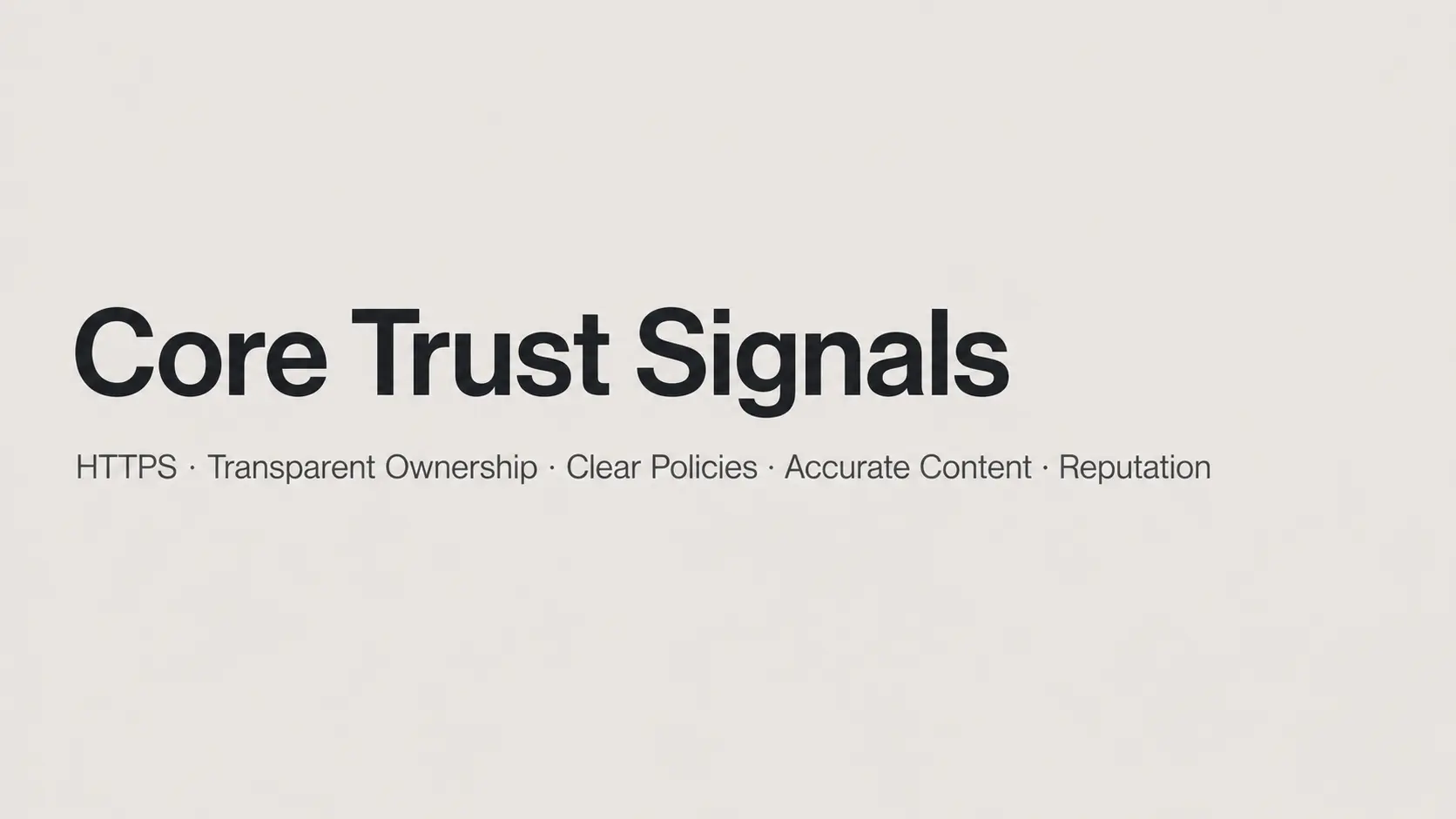
Trust signals communicate safety, integrity and accountability. Users often assess them within seconds and search engines can evaluate many of them at scale.
- Secure browsing: HTTPS, valid certificates and safe site behavior.
- Transparent ownership: Clear information about the organization, team and how to contact you.
- Clear policies: Privacy policy, terms, returns and advertising disclosures that match what the site does.
- Accurate content maintenance: Updates, corrections and visible review practices when facts change.
- Reputation signals: Consistent reviews and sentiment across credible platforms, not manufactured praise.
Trust is strengthened when a site avoids manipulative tactics. Overly aggressive ads, misleading buttons, or unclear affiliate disclosures can erode confidence quickly.
How EEAT Connects to Authority and Trust?

EEAT is a useful lens for improving credibility. It stands for experience, expertise, authority and trust, with trust acting as the foundation.
Experience shows that the content reflects real use, testing, or firsthand familiarity. Expertise reflects knowledge and skill, which should be visible through accurate explanations, correct terminology and good judgment.
Authority reflects recognition, including citations and mentions from others. Trust reflects transparency and reliability, including honest claims, safety and accountability.
On Page Signals that Support Authority
On page authority signals help search engines understand what a page is about and why it is valuable. They also improve user comprehension, which supports engagement.
- Clear topic focus: Each page targets a narrow intent and avoids unrelated filler sections.
- Internal linking: Logical links between related pages that build topical clusters and help crawlers discover depth.
- Evidence and sourcing: Citations to primary sources, standards and reputable references when claims require support.
- Strong information hierarchy: Headings, summaries and scannable structure that reduce effort for readers.
- Original insights: Unique explanations, frameworks or data points produced by your team or process.
Editorial consistency matters. A site that uses the same definitions, naming conventions and review standards across a topic area feels more authoritative.
Technical SEO and UX Signals That Influence Trust
Technical quality is often invisible when done well. When it is done poorly, it becomes a trust problem because users experience errors, slow pages and unstable layouts.
- Site speed and stability: Fast loading pages with minimal layout shifts and responsive design.
- Mobile usability: Readable text, tappable elements and navigation that works without friction.
- Safe and clean experience: No malware, no deceptive popups and minimal intrusive ads.
- Structured data accuracy: Markup that matches visible content and avoids spammy schema use.
- Index control: Canonicals, noindex tags and XML sitemaps used to prevent duplication and thin pages.
Trust improves when your site behaves predictably. Consistent navigation, clear labels and accessible design choices reduce confusion and increase perceived professionalism.
Content Quality Practices That Build Long Term Credibility
Authority and trust compound when content meets a consistent standard. The key is to publish fewer pieces with higher usefulness and maintain them over time.
- Define your editorial standards. Document what counts as a credible source, what claims require citations and how updates are handled.
- Create topic clusters. Build a pillar page and supporting articles that cover subtopics in depth with meaningful internal links.
- Use expert review when needed. Add review processes for sensitive topics and ensure reviewers are named when appropriate.
- Write for intent and outcomes. Focus on what users need to do, decide, or understand rather than chasing broad keywords.
- Maintain and improve. Refresh outdated sections, fix broken references and remove content that no longer serves a purpose.
Consistency is a competitive advantage. When every page aligns with the same standards, both users and crawlers form a clearer picture of your site quality.
Authority and Trust Signals You Can Audit
An audit should look at signals that are measurable and actionable. It should also separate quick fixes from long term work, so you can prioritize.
| Signal Area | What to Check | What Good Looks Like |
|---|---|---|
| Content Credibility | Sources, accuracy, author info, update history | Clear authorship, reliable references, regular refreshes |
| Site Trust | HTTPS, security warnings, spam reports, ads | No warnings, clean UX, transparent disclosures |
| Authority Signals | Relevant backlinks, mentions, branded searches | Steady earned links and growing brand demand |
| Technical Quality | Speed, mobile usability, index coverage, duplication | Fast pages, stable templates, clean indexing |
After the audit, convert findings into a short backlog. Focus first on trust issues that can block growth, then invest in authority builders like content depth and digital PR.
Common Mistakes that Weaken Authority and Trust
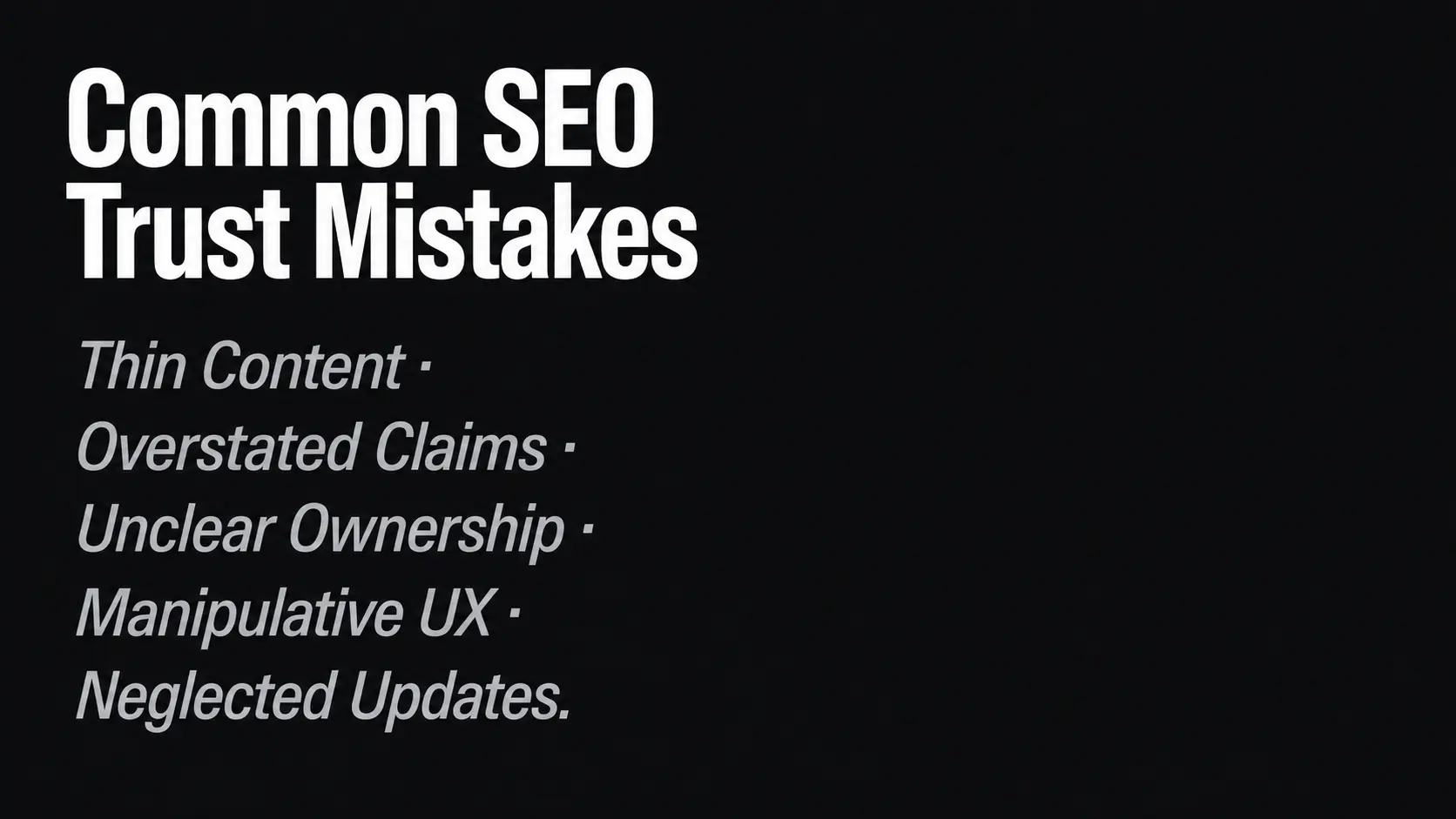
Many sites lose credibility due to avoidable missteps. These often happen when growth is prioritized over accuracy and user experience.
- Thin content at scale: Publishing many similar pages with little unique value.
- Overstated claims: Promises that are not supported by evidence or that omit key limitations.
- Unclear ownership: Missing team information, vague contact pages, or no accountability.
- Manipulative UX: Aggressive interstitials, confusing buttons and misleading ad placement.
- Neglected updates: Outdated facts, broken pages and references that no longer match current reality.
Fixing these issues usually improves conversion rates as well. Users are more likely to subscribe, buy, or share when they feel safe and respected.
Conclusion
Authority and trust signals in SEO come from how your site performs, how your content is created and maintained and how others validate your work. Strong signals are built through clarity, accuracy, transparency and a clean user experience.
Start by eliminating trust risks, then build authority through topical depth, expert input where needed and consistent editorial standards. Over time, credibility becomes an asset that supports rankings across your entire site.