
Off-page SEO is the work done outside your website that helps search engines and people trust your brand. It strengthens authority signals that support higher rankings, more clicks and better long-term stability.
Unlike on-page SEO, which improves pages you control, off-page SEO relies on third-party signals. These signals include links, brand mentions, reviews and engagement that indicate credibility.
What Off-Page SEO Means?
Off-page SEO refers to the reputation and authority your site earns across the web. Search engines use these cues to judge whether your content deserves to rank for competitive searches.
The strongest off-page signals come from independent websites and communities. When other sources reference you positively, it becomes easier to compete, even when rivals publish similar content.
Why Website Authority Matters?
Authority is a shorthand for how trustworthy and influential your site appears within a topic. Higher authority often correlates with stronger rankings, faster indexing and better performance in crowded results pages.
Authority also reduces risk. Sites with solid reputations tend to recover faster from algorithm shifts because their signals are harder to fake and more consistent over time.
Off-Page SEO Vs On-Page SEO
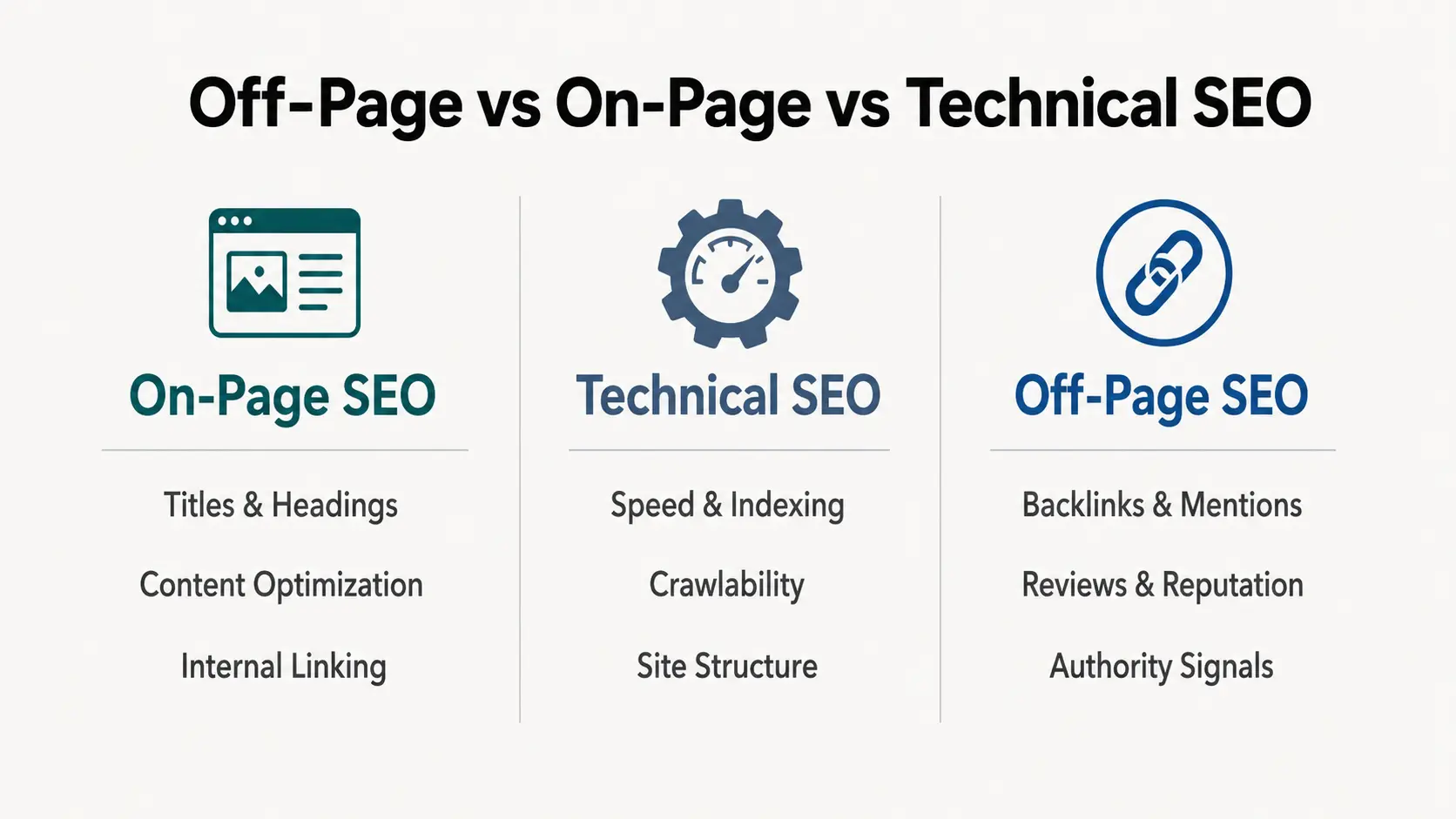
On-page SEO focuses on content quality, keyword alignment, internal links and technical clarity. Off-page SEO focuses on external validation and how the wider web responds to your site.
Both are required for sustainable growth. Great content without authority can struggle to rank, while authority without strong content can lose visibility as expectations rise.
| Area | Main Goal | Common Signals |
|---|---|---|
| On-Page SEO | Make pages relevant and easy to understand | Titles, headings, internal links |
| Technical SEO | Improve crawlability and performance | Speed, indexing, structured data |
| Off-Page SEO | Build trust and authority outside the site | Backlinks, mentions, reviews |
| Brand Building | Increase recognition and preference | Search demand, repeat mentions, sentiment |
This comparison helps clarify which tasks belong on your site and which require relationship building. A balanced plan keeps progress steady across all areas.
Core Off-Page SEO Signals Search Engines Watch
Search engines look for patterns that indicate real-world trust. Off-page signals are valuable because they are created by others, not by the site owner.
No single factor guarantees results. Strong performance usually comes from a mix of links, brand visibility and consistent positive reputation.
Backlinks and Link Quality
Backlinks are still a major authority signal because they act like citations. Quality matters more than quantity because low-value links can be ignored or become a liability.
Strong links tend to come from relevant sites, earned editorially and placed in context. Natural anchor text variety is also important for a healthy link profile.
Brand Mentions Without Links
Unlinked brand mentions can support trust by reinforcing that your business is known. They often show up in press coverage, community discussions and industry roundups.
Mentions also increase branded search behavior over time. That demand signals popularity and can improve click performance when your pages appear.
Reviews and Reputation Signals
Reviews influence both visibility and conversions, especially for local businesses. The most useful review profiles are consistent across platforms and show steady activity rather than sudden bursts.
Replying to reviews can strengthen trust when done calmly and professionally. It also demonstrates real customer support practices.
Topical Authority and Entity Signals
Search engines connect brands to topics through entities, associations and consistent information. When your business is referenced alongside key concepts and categories, it becomes easier to rank within that subject area.
Consistency across citations, profiles and public references reduces confusion. Clear identity signals support stronger matching to relevant searches.
Safe Link Building Methods For Beginners
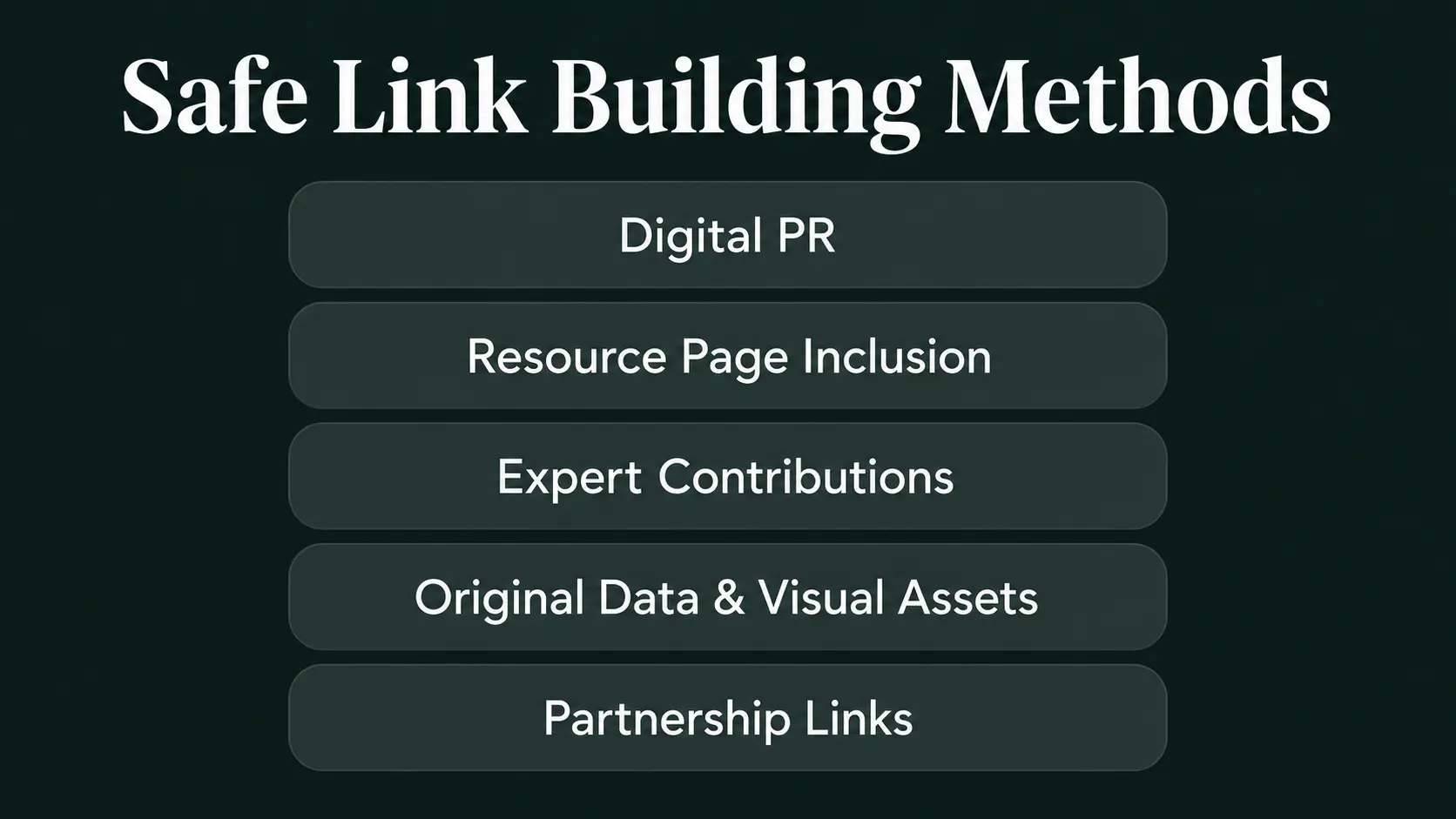
Beginner-friendly link building focuses on earning links through value and relationships. Avoid shortcuts that promise hundreds of links quickly, because those tactics often rely on spam networks.
A safe approach builds durable authority. It also protects your site from manual actions and algorithmic suppression tied to manipulative patterns.
- Digital PR And Newsworthy Updates Share real announcements, research, or unique insights that publications can cite.
- Resource Page Inclusion Earn placement on curated lists when your content genuinely fills a gap and matches the page topic.
- Expert Contributions Provide quotes or commentary that adds expertise and may earn an attribution link.
- Original Data And Visual Assets Publish proprietary statistics, charts, or frameworks that others reference as a source.
- Partnership And Community Links Support relevant events, associations, or collaborations that naturally include acknowledgments.
These methods prioritize relevance and credibility. Over time, they build a link profile that looks natural and stays valuable.
Local Off-Page SEO and Citations
Local off-page SEO centers on consistent business information and strong reputation across local platforms. Citations help confirm your business name, address and phone details.
Accuracy matters more than volume. Conflicting listings can weaken trust and lead to ranking instability for location-based searches.
- Consistent NAP Keep business name, address and phone identical across major directories and profiles.
- Category Alignment Use precise categories that match your primary services to improve relevance.
- Review Velocity Encourage a steady flow of authentic reviews rather than one-time campaigns.
Local authority builds gradually. Small improvements across listings and reviews often compound into meaningful visibility gains.
Social Signals and Community Visibility
Social media is not a direct ranking factor in a simple way, but it supports off-page SEO by distributing content and growing brand awareness. More visibility can lead to links, mentions and repeat searches.
Community platforms also create discovery paths. Consistent participation can earn trust, which can turn into editorial references on websites and newsletters.
- Content Distribution Share useful resources where your audience already spends time.
- Relationship Building Engage with creators, editors and subject experts in a professional way.
- Brand Search Growth Increase recognition so people look for your name directly in search engines.
Keep engagement focused on adding value. Overly promotional posting often reduces reach and weakens trust.
How To Evaluate Off-Page SEO Quality?
Off-page SEO should be measured with both SEO metrics and business outcomes. Rankings matter, but the best signals also improve traffic quality and conversions.
Use consistent reporting windows so trends are clear. Sudden changes can be caused by link spikes, publicity, seasonality, or algorithm updates.
- Referring Domain Relevance Track how closely linking sites align with your topics and audience.
- Link Placement Prefer editorial links within main content over footers, sidebars, or author bio blocks.
- Anchor Text Variety Look for natural anchors that include brand, URLs and descriptive phrases.
- Brand Mentions And Sentiment Monitor how often you are referenced and whether the context is positive.
- Lead And Revenue Attribution Connect referral traffic and assisted conversions to authority-building efforts.
When quality improves, you often see stronger performance across multiple pages, not just one. That is a sign your authority is lifting the whole domain.
Common Off-Page SEO Mistakes To Avoid
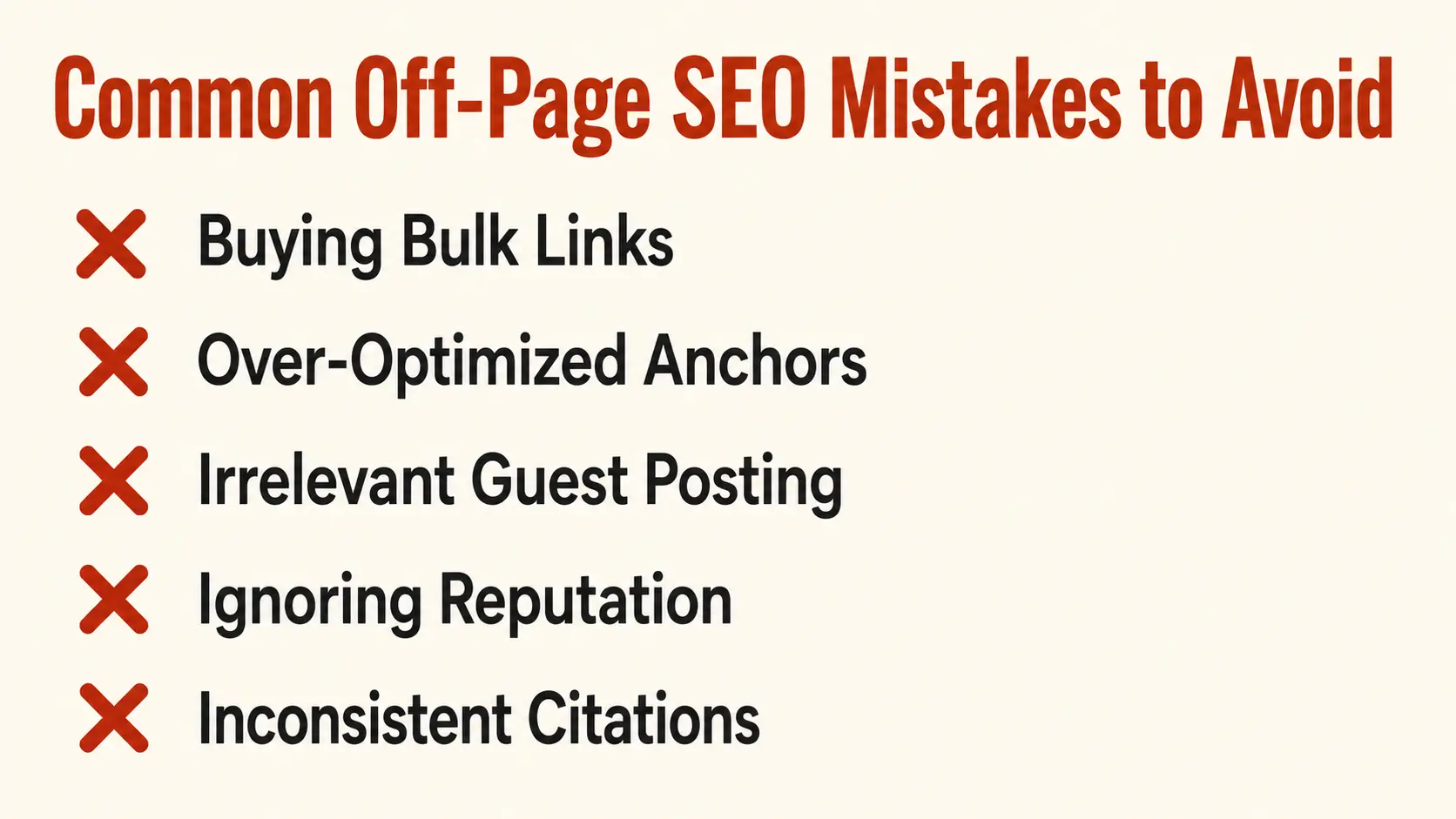
Many off-page problems come from chasing volume over quality. Low-effort tactics can create patterns that search engines learn to discount.
Focus on long-term credibility. The goal is to earn trust signals that would exist even if search engines did not.
- Buying Bulk Links Paid networks often leave detectable footprints and can trigger penalties.
- Over-Optimized Anchors Repeating the same keyword anchor looks unnatural and can be devalued.
- Irrelevant Guest Posting Publishing on unrelated sites dilutes topical authority and wastes effort.
- Ignoring Reputation Weak review management can reduce clicks even when rankings improve.
- Inconsistent Citations Conflicting business info harms trust signals for local visibility.
Avoiding these mistakes protects progress. It also keeps your efforts aligned with quality-focused ranking systems.
Conclusion
Off-page SEO is the process of earning trust and authority through signals you do not fully control. Backlinks, mentions, reviews and consistent identity signals work together to support stronger rankings.
Start with safe tactics that build real credibility, then measure quality and relevance over volume. When your reputation grows across the web, your website becomes easier to rank and harder to replace.