

Search engines reward pages that load fast, work smoothly and feel trustworthy. That outcome depends on user experience and technical SEO working together as one system, not as separate checklists.
When a site is healthy, users stay longer, engage more and convert with less friction. Those same improvements help crawlers discover, render and understand content with fewer errors.
Why Site Health Connects User Experience And Technical SEO?
User experience focuses on how people perceive speed, clarity, navigation and stability. Technical SEO focuses on how search engines crawl, index, interpret and evaluate those same pages.
Site health is where the two overlap. A technically clean site reduces friction for bots and humans, which supports stronger engagement signals and more reliable indexing.
Core Web Vitals And Page Experience Signals
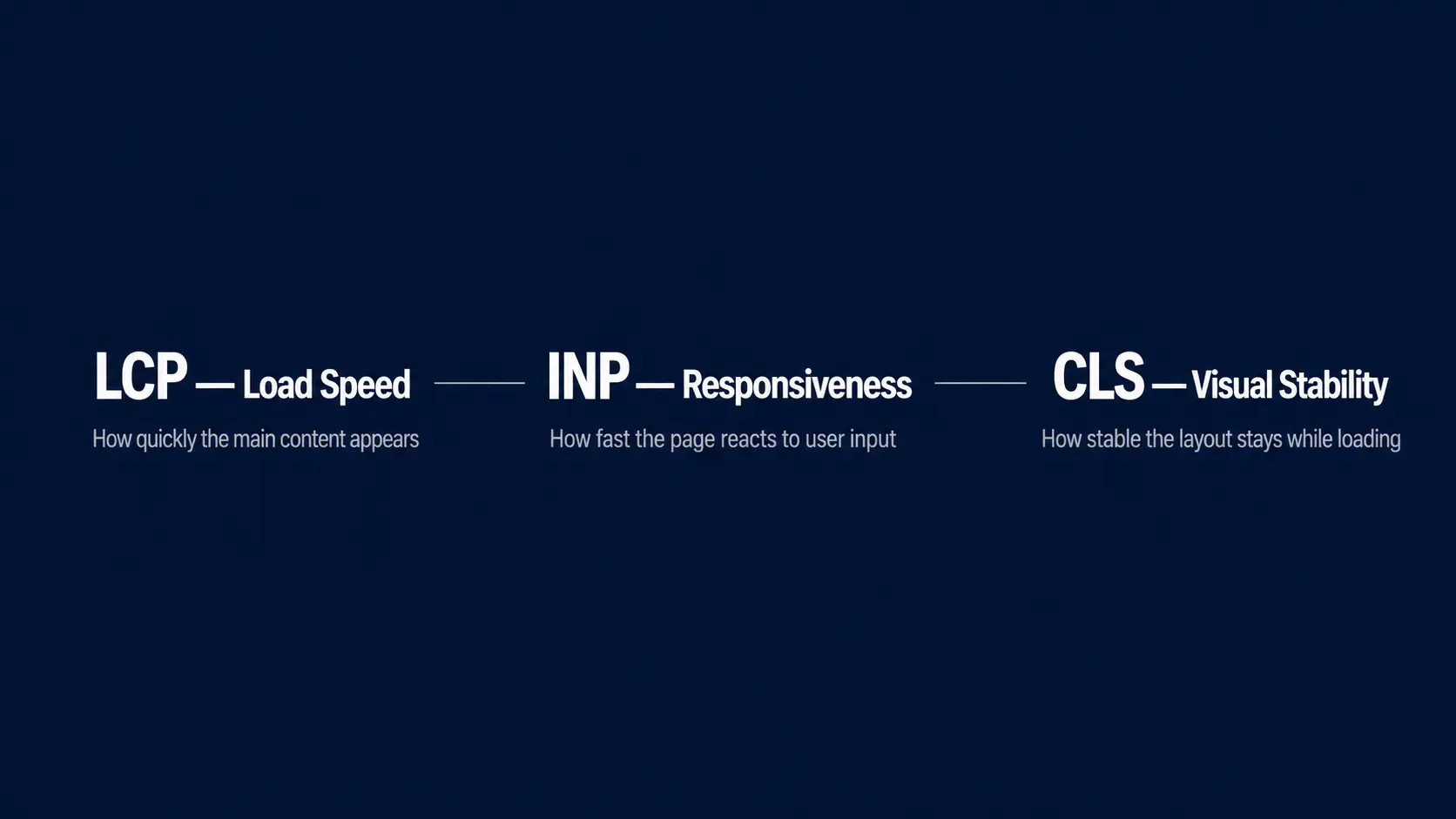
Core Web Vitals measure loading, interactivity and visual stability. They are not the only ranking inputs, but they are strong indicators of whether pages feel usable under real conditions.
Improving these metrics usually means fixing root technical problems such as heavy scripts, slow servers and unstable layouts. Those fixes often lift both perceived quality and crawl efficiency.
Largest Contentful Paint And Real Load Speed
Largest Contentful Paint reflects how quickly the main content appears. Users judge a page quickly and a slow hero section or product grid can trigger bounces before reading begins.
Better LCP often comes from optimized images, reduced render blocking resources, efficient fonts and fast server response times. Each change reduces waiting and improves the chance that content gets consumed.
Interaction To Next Paint And Responsiveness
Interaction to Next Paint reflects how responsive a page feels after user input. Laggy menus, sticky filters and delayed buttons create distrust and reduce conversions.
Responsiveness improves when JavaScript is trimmed, long tasks are broken up and third party scripts are controlled. These are technical choices that directly impact usability.
Cumulative Layout Shift And Visual Stability
Cumulative Layout Shift measures unexpected movement of content. Layout jumps often come from ads, images without dimensions, late loading fonts and injected elements.
Stable layouts improve reading flow and reduce misclicks. They also signal that the page is built with care, which supports a stronger perceived quality.
Crawlability And Indexability Foundations
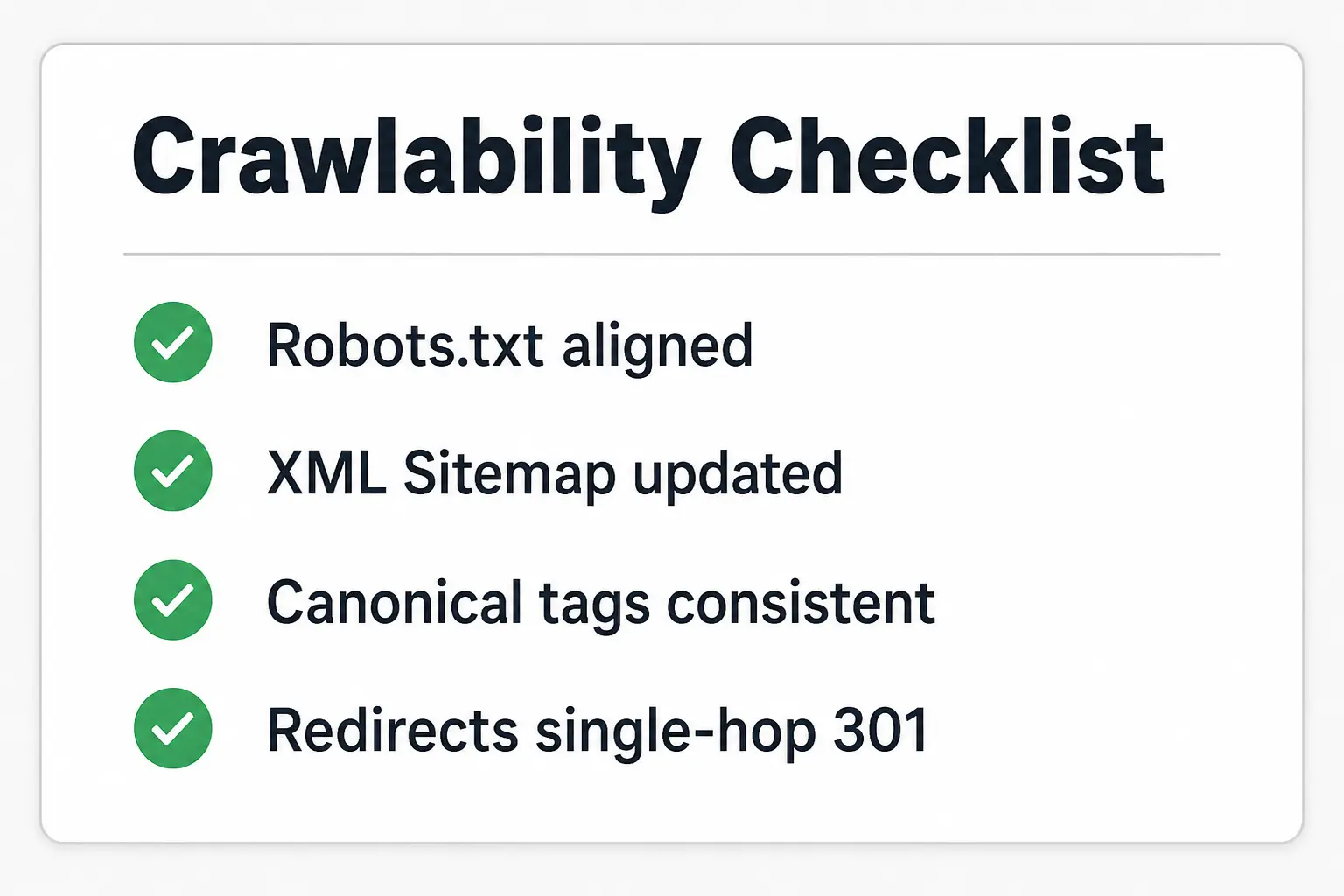
Search engines must crawl and index pages before they can rank. Crawl waste happens when bots hit redirect chains, error pages, duplicate URLs, or blocked assets needed for rendering.
A healthy site keeps crawl paths clean, serves consistent status codes and avoids accidental noindex directives. That creates a stable pipeline from discovery to ranking.
- Robots.txt alignment. Keep essential CSS and JavaScript accessible so rendering matches user experience.
- XML sitemaps that reflect reality. Include only canonical, indexable URLs and update when content changes.
- Consistent canonical tags. Prevent duplicate URL variants from diluting relevance and link equity.
- Clean redirects. Replace chains with single hop 301 redirects and remove loops.
Once crawl paths are predictable, content quality improvements have a better chance to show up in search results quickly.
Site Architecture And Internal Linking For Better Navigation
Architecture shapes how users move through a site and how bots interpret topical relationships. Clear categories, sensible URL structure and shallow click depth help both discovery and engagement.
Internal linking acts as a map and a set of hints. Links placed in context support comprehension, distribute authority and reduce orphan pages that never surface in crawl cycles.
- Define primary hubs. Group content by intent and topic so users can predict where answers live.
- Limit click depth. Keep important pages within a few clicks from the homepage and key category pages.
- Use descriptive anchors. Make link text specific so users and crawlers understand the target page.
- Audit orphan pages. Ensure every indexable page has at least one meaningful internal link.
A strong structure reduces pogo sticking and improves the chance that deeper pages earn visibility.
Mobile Friendliness And Responsive Design
Most crawling and ranking evaluation now reflects mobile rendering for many sites. If mobile layouts hide key content, break navigation, or shift elements, rankings can suffer even when desktop looks fine.
Responsive design should preserve core content, maintain readable typography and keep touch targets comfortable. Technical choices such as viewport settings, image sizing and CSS breakpoints determine whether the experience holds up.
HTTPS Security And Trust Signals
HTTPS protects users from interception and tampering and it supports trust during checkout, form submission and account login. Mixed content warnings and outdated TLS configurations reduce confidence and can disrupt asset loading.
Security hygiene also supports technical stability. Valid certificates, secure redirects from HTTP to HTTPS and consistent canonical URLs help avoid index fragmentation.
Structured Data And Search Understanding
Structured data helps search engines interpret entities and page types such as products, articles, organizations and FAQs. It can improve eligibility for rich results when implemented correctly and consistently.
Markup must match visible content and use valid properties. Spammy or inaccurate markup creates manual action risk and harms trust, so validation and governance matter.
Duplicate Content And Canonicalization
Duplicate content often comes from URL parameters, trailing slash variants, pagination, faceted navigation and printer friendly pages. Users may not notice, but search engines can split signals across multiple copies.
Canonicalization consolidates value toward the preferred URL. Combined with parameter handling, consistent internal links and clean redirects, it keeps relevance focused and indexation controlled.
Performance Optimization That Improves Rankings And Conversions
Performance work should target bottlenecks that affect both user perception and rendering. Speed gains that reduce time to first byte and render blocking resources typically benefit all pages, not just one template.
Focus on a few high impact levers first. The goal is stable, repeatable performance across devices and network conditions.
- Server response and caching. Use CDN caching, efficient database queries and compression to reduce latency.
- Image optimization. Serve next gen formats, responsive sizes and lazy loading where appropriate.
- Script discipline. Remove unused code, defer noncritical scripts and minimize third party tags.
- CSS efficiency. Inline critical CSS and reduce unused styles to speed first render.
These changes improve usability and also reduce the resources needed for crawling and rendering.
Site Health Checklist With Ownership And Impact
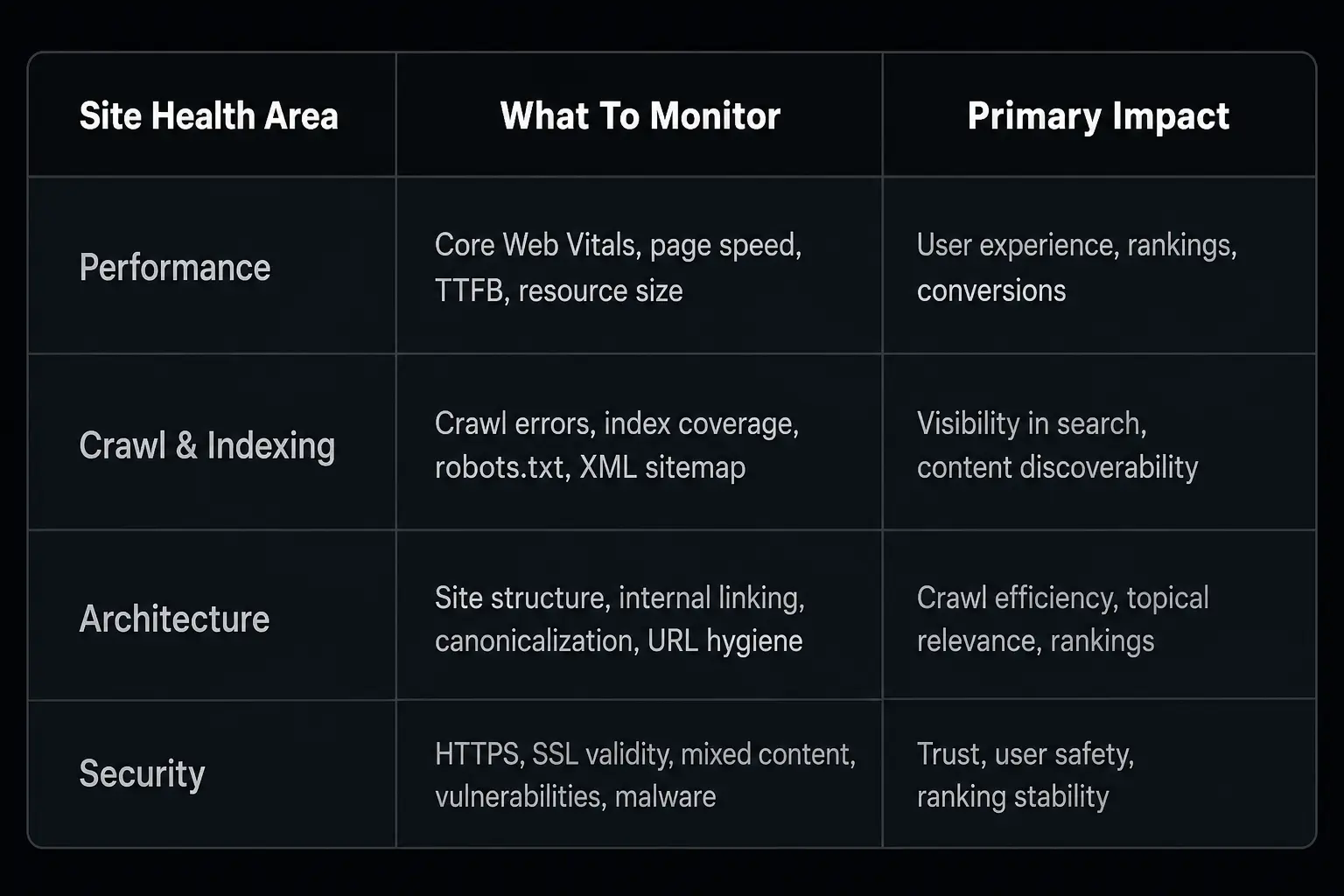
Site health is easier to maintain when responsibilities are clear. A simple shared view helps SEO, engineering and content teams prioritize work that affects rankings and experience.
| Site Health Area | What To Monitor | Primary Impact |
|---|---|---|
| Performance | LCP, INP, CLS, server response time | Lower bounce rates and better crawl rendering |
| Crawl And Indexing | Coverage errors, redirects, robots rules, sitemaps | More reliable discovery and faster indexing |
| Architecture | Click depth, internal links, orphan pages | Stronger topical relevance and improved navigation |
| Security And Integrity | HTTPS, mixed content, broken resources | Higher trust and fewer rendering issues |
When monitoring is consistent, improvements stick and regressions get fixed before they impact visibility.
How To Run A Sustainable Technical SEO Maintenance Routine?
One time fixes fade if deployments reintroduce problems. Sustainable maintenance relies on repeatable checks, clear thresholds and fast feedback across teams.
Keep the routine small enough to execute regularly. Automation is helpful, but process ownership matters more than tooling.
- Baseline key templates. Track homepage, category, product and content templates for performance and indexation health.
- Review logs and crawl data. Identify wasted crawl paths, frequent errors and slow endpoints.
- Validate releases. Test structured data, canonicals and robots directives before and after deployments.
- Prioritize by user impact. Fix issues that block actions, break content access, or slow critical journeys.
This routine keeps site health aligned with user needs while preserving technical clarity for search engines.
Conclusion
User experience and technical SEO are inseparable because both depend on the same underlying site health. Fast, stable, secure and well structured pages earn deeper engagement and allow crawlers to index content with confidence.
Prioritize Core Web Vitals, crawl and indexation hygiene and a clean architecture that supports users first. Consistent maintenance turns these improvements into durable search rankings rather than short lived wins.